Wednesday, December 31, 2025
Home Blog Page 113

US war department threatens Russia

Speaking at Ramstein military base on Wednesday ahead of a meeting of countries coordinating military support for Ukraine, he lauded NATO members’ recent militarization push.

“If this war does not end, if there is no path to peace in the short term, then the United States, along with our allies, will take the steps necessary to impose costs on Russia,” Hegseth said.

“If we must take this step, the US War Department stands ready to do our part in ways that only the United States can do,” he added.

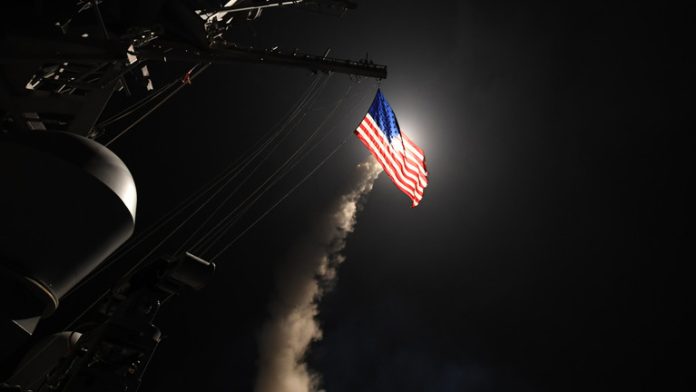
On Sunday, President Donald Trump stated that he could supply Ukraine with US-made Tomahawk cruise missiles if the Ukraine conflict “is not going to get settled,” and admitted that it would be “a new step of aggression.”

The longer-range variants of the cruise missile can strike targets up to 2,500km (1,550 miles) away, potentially threatening the Russian capital and other cities.

Supplies of the missiles to Ukraine would represent a “new stage of escalation,” since US troops would have to be directly involved in using them, President Vladimir Putin said earlier this month.

Russian Foreign Ministry spokeswoman Maria Zakharova said on Wednesday that Ukraine’s President Volodymyr Zelensky wanted to use the Tomahawks to conduct “new terrorist attacks” against Russia “aimed at escalating the conflict.”

Moscow has blamed the pause in direct Russian-Ukrainian peace talks on Kiev, arguing that it lacks interest in a settlement, emboldened by Western military support.

“Russia is ready for a peaceful settlement,” but continues its military operation “due to the lack of alternatives,” Kremlin spokesman Dmitry Peskov noted on Monday.

Moscow appreciates Trump’s peace efforts, and hopes he can help “encourage the Ukrainian side to be more proactive and more prepared for the peace process,” he added.

NATO keeps massive forward military presence on Russia’s doorstep: Defense chief

NATO

Belousov made his remarks at a joint session of the Russian and Belarusian defense ministries on Wednesday. Cooperation between Moscow and Minsk remains a key factor in maintaining regional stability in light of the “openly hostile actions” of the West, he stated.

“The Alliance maintains a massive forward military presence on its eastern flank,” Belousov said, adding, “The total strength of NATO troops involved in the exercises held on its eastern flank amounted to roughly 60,000.”

This year alone, the US-led military bloc held almost a dozen drills in Scandinavia, Central and Eastern Europe as well as the Baltics and the Black Sea, which involved thousands of soldiers each.

Just one series of exercises, dubbed Defender 25, which was held throughout May and June, involved a total of 25,000 troops. The forces were deployed along the entire eastern border of the bloc, from Norway in the north to Bulgaria and Greece in the south, as part of the three-phase drill.

Other major NATO exercises included the 10,000-strong ‘Joint Viking 2025’ held in Norway in March, as well as the 16,000-strong ‘Hedgehog’ held in Estonia in May. The developments came amid increasingly belligerent statements from the European NATO members, which have repeatedly presented Russia as a threat since the escalation of the Ukraine conflict in February 2022.

Moscow has repeatedly stated that it has no intention to attack any NATO nations, calling such accusations unfounded.

It nonetheless warned that the bloc’s active involvement in the Ukraine conflict through weapons supplies and other assistance to Kiev risks a direct confrontation between Russia and NATO.

Last month, Politico reported that EU officials were increasingly worried about tensions with Moscow potentially spilling into a major conflict akin to World War I. Russia, in turn, expressed its concerns over the fact that World War III was seriously being discussed in the West as a potential scenario.


Iran’s president calls on Islamic nations to unite for peace

Masoud Pezeshkian

His remarks came during a Wednesday meeting where the president discussed the ongoing tensions between Afghanistan and Pakistan, two neighboring Muslim nations.

Pezeshkian said that the conflicts and disagreements among Islamic nations are not the desires of their peoples but rather the result of plots by enemies of Islam and international Zionism.

He expressed deep concern over the recent events between Afghanistan and Pakistan, saying that the recent events between these two brotherly, Muslim, and neighboring countries have caused deep concern and sorrow among all countries in the region, including Iran.

The Muslim nations, especially those with shared roots and cultures in the region, have an unbreakable bond of faith, history, and culture, the president emphasized.

Citing the teachings of the Holy Quran, he reminded that the believers are brothers, urging nations to work together for peace, justice, and progress.

Pezeshkian proposed that fostering dialogue and strengthening brotherly ties could serve as effective strategies to reduce tensions between Afghanistan and Pakistan.

He affirmed that Iran is committed to utilizing all its resources and efforts to diminish tensions, promote dialogue, and reinforce brotherly connections between the two neighboring countries.

The region needs peace, cohesion, and cooperation more than ever, Pezeshkian emphasized, expressing confidence that the governments and peoples of Afghanistan and Pakistan will navigate their challenges with wisdom and ultimately choose the path of friendship, collaboration, and mutual trust.


Syria says won’t wait for global community to reform economy

Syria War

Mohammed Yisr Barnieh, who spoke at the International Monetary Fund in Washington, was part of Syria’s first delegation to the Fund and the World Bank’s semi-annual gathering of central bank governors and finance ministers since the Syrian war broke out in 2011.

Barnieh serves as finance minister in the country’s transitional government, set up earlier this year by Ahmed al-Sharaa after his forces ousted Syria’s long-serving strongman Bashar al-Assad.

Without the IMF and other international financial institutions, Syria “cannot move ahead,” Barnieh said.

“But if you are slow, we will move without you.”

“What we need from the IMF and World Bank is capacity building, knowledge transfer, technology, know how, expertise and so on,” he continued, adding, “We don’t need money from them.”

“I’m not excluding borrowing down the road, but now we have no intention whatsoever,” he added, saying, “We want to make sure that our house (is) in order.”

Syria’s government faces a monumental challenge in rebuilding the country’s war-torn economy after more than 15 years of war — something Barnieh estimated would likely cost “tens of billions” of dollars.

Barnieh said his immediate priorities were to restore “confidence and trust” with both the public and the private sector.

This, he added, included a focus on restoring fiscal credibility, simplifying Syria’s overly complex taxation system, and tackling its huge debt burden.

“If you look at our reform agenda now, every single piece of reform is focused on how to create the ecosystem to support the private sectors and how to create the ecosystem to support attracting foreign investment.”

“I’m sure one day, everybody will realize that Syria is a good place to invest,” he continued, stating, “My message is: Do not wait…It will take quite some time, but then the opportunity will be missed.”

Addressing the US-Syria relationship, Barnieh said it was improving every day, and that Syria was moving ahead with reforms despite ongoing sanctions.

“We are very optimistic about the Syria-US relationship, and we are very optimistic of seeing American companies, American banks, American and international organizations in Syria,” he added.


Al-Sharaa to Putin in Moscow: Syria seeks to ‘redefine’ Russia ties

Al-Sharaa made the statement on Wednesday while meeting with Putin in Moscow during his first state visit to the country that has been hosting al-Assad since his exile from Syria 10 months ago.

“We are trying to restore and redefine in a new way the nature of these relations so there is independence for Syria, sovereign Syria, and also its territorial unity and integrity and its security stability,” al-Sharaa told Putin in the Kremlin.

The Syrian leader assured that Damascus would honour all past agreements with Moscow.

“There are bilateral relations and shared interests that bind us with Russia, and we respect all agreements made with it,” he added.

According to Syrian officials cited by the Reuters and AFP news agencies, al-Sharaa, who once headed the Syrian branch of al-Qaeda under the name Abu Mohammed al-Julani, plans to use today’s meeting with Putin to request Moscow hand over al-Assad.

But there was no mention of the sensitive diplomatic matter in al-Sharaa’s brief televised remarks at the beginning of the meeting.

Welcoming al-Sharaa, Putin hailed decades of “special relations” between the two countries, in which he claimed Moscow was always guided by Syrian people’s interests, and said his government wanted to expand them.

He also lauded recent parliamentary elections in Syria – the first since al-Assad’s overthrow – saying the process would strengthen ties between all political forces.

“I believe that this is a great success for you, because it leads to the consolidation of society, and despite the fact that Syria is currently going through difficult times, it will nevertheless strengthen ties and cooperation between all political forces in Syria,” stated Putin.

Despite having been on opposite sides of the battle lines of Syria’s 13-year war that Moscow intervened in, the new rulers in Damascus have taken a pragmatic approach to relations with Moscow, as they have with other foreign powers.

For Damascus, maintaining ties with Russia is important for rebuilding the war-shattered country and shoring up international legitimacy for the government.

In a recent interview with US network CBS, al-Sharaa stressed, “Russia has close and longstanding relations with Syria, which relate to the basic structure of the state and to energy and food, for which Syria depends partly on Russian supplies, as well as some old strategic interests”.

Russia, for its part, has retained a presence at its air and naval bases on the Syrian coast, and the Kremlin has voiced hope for negotiating a deal to keep the outposts. Moscow has also reportedly sent oil shipments to Syria.

Temporary ceasefire declared after Pakistan-Afghanistan clashes

Pakistan’s Foreign Ministry said on Wednesday that the ceasefire would come into effect at 6pm local time (13:00 GMT). Both countries would make sincere efforts through dialogue to find a solution to the standoff, which was complex yet resolvable, the ministry added.

The ceasefire announcement came after renewed fighting killed and wounded dozens in a remote border area spanning southeastern Afghanistan’s Spin Boldak district and Pakistan’s Chaman district overnight on Tuesday.

Both sides accused the other of triggering the clashes.

In a post on X, Afghan Taliban spokesman Zabihullah Mujahid accused Pakistani forces of initiating the border fighting by firing “light and heavy weapons” at Afghanistan, killing 12 civilians and injuring more than 100.

Ali Mohammad Haqmal, a press spokesman in Spin Boldak district, put the civilian death toll at 15. The AFP news agency quoted a district hospital official as saying 80 women and children are among the wounded.

Mujahid claimed Afghani forces returned fire, killing “a large number” of Pakistani soldiers, seizing Pakistani weapons and tanks and destroying Pakistani military installations.

But Pakistani authorities blamed the Afghan Taliban for first firing on a Pakistani military post and other areas near the border, causing the clashes that also wounded four of its own civilians. The Reuters news agency quoted unnamed security officials as saying six Pakistani soldiers were killed in the violence, which one official said lasted around five hours.

Najibullah Khan, a resident of Pakistan’s Chaman district, stated the clashes forced some people living near the border to flee.

“People are in a very difficult situation. Shells are falling in people’s homes,” he added.

In a statement, Pakistan’s army announced its forces had “effectively repulsed” the attack from Afghanistan’s Taliban, killing from 15 to 20 of their members and injuring others. It also noted it had repelled separate Afghan Taliban attacks earlier in the night in Kurram district further north.

“The insinuations that the attack was initiated by Pakistan, are outrageous and blatant lies, just like the claims of capturing Pakistani posts or equipment,” said the military statement.

“The Armed Forces stand resolute and fully prepared to defend the sovereignty and territorial integrity of Pakistan,” the statement read.

The conflict had subsided as of 05:30 GMT, according to Afghanistan’s Taliban.

With Afghanistan on edge amid the tensions on the border, two explosions were heard in central Kabul on Wednesday evening, AFP reported.

Taliban government spokesman Zabihullah Mujahid said an oil tanker and a generator had exploded, sparking fires in the capital.

Tensions between Afghanistan and Pakistan have been especially fraught since Saturday, when both sides traded fire across multiple border regions, resulting in dozens of casualties on each side.

Although the clashes halted on Sunday after appeals from Saudi Arabia and Qatar, most border crossings between Pakistan and Afghanistan have remained closed.

Over the weekend, Kabul announced that in retaliation for what it called repeated violations of Afghan territory and airspace, it targeted several Pakistani military posts and killed 58 Pakistani soldiers.

Pakistan’s military reported lower figures, saying it lost 23 soldiers and killed more than 200 “Taliban and affiliated terrorists” in retaliatory fire along the frontier.

Pakistan accuses Kabul of harbouring fighters with the Taliban-allied Pakistan Taliban, known by the acronym TTP, which has carried out numerous deadly attacks in Pakistan.

Kabul denies the charge, noting it does not allow its territory to be used against other countries.

Muttaqi addressed Pakistan-Afghanistan relations during a press conference in India, adding while both countries want a positive relationship, “there are certain groups in Pakistan that are trying to stir up unrest”.

NATO must purchase more US arms for Ukraine: Pentagon chief

Moscow has repeatedly stated that Western arms shipments cannot change the balance of power on the battlefield, arguing that Ukraine’s chronic manpower shortage, fueled by mass draft avoidance and desertion, undermines any material advantage.

Speaking alongside NATO Secretary General Mark Rutte, Hegseth praised the Prioritized Ukraine Requirements List (PURL) initiative and said the European members must spend more funds through it.

“Our expectation today is that more countries donate even more, that they purchase even more to provide for Ukraine,” Hegseth stated.

Rutte noted there was “firepower coming out of our defense industry” to bolster Ukrainian forces.

US President Donald Trump recently claimed that with European funding for American weapons, Ukraine could still achieve its territorial goals – a reversal of his earlier assessment that the county had “no cards” to play. Trump is expected to soon announce whether the US will approve deliveries of long-range Tomahawk cruise missiles to Kiev, a move Moscow has warned would mark a serious escalation but would not significantly alter the frontline situation.

The Russian government has accused European backers of Kiev of prolonging the conflict at the expense of Ukrainian lives, arguing that the former are unwilling to admit the failure of their strategy.

Meanwhile, European NATO members continue to bear the economic fallout of their sanctions policy against Russia. Having rejected affordable Russian energy, many EU economies have faced surging production costs and widespread industrial bankruptcies, while the US has benefited from increased investment inflows and higher sales of liquefied natural gas to Europe.


‘No winners’ in trade war: China

Trump issued the threat Tuesday after slamming Beijing’s halt of US soybean purchases as an “economically hostile act”.

“We are considering terminating business with China having to do with Cooking Oil, and other elements of Trade, as retribution,” Trump said on his Truth Social platform.

While tensions between Washington and Beijing have eased from their peak earlier in the year, a truce struck by the leaders remains shaky.

Beijing imposed fresh controls on the export of rare earth technologies and other items last week, leading Trump to warn Friday that he would roll out an additional 100 percent tariff on the country’s goods from November 1.

China’s foreign ministry on Wednesday announced that trade disputes were “not in the interests of any party” when asked about Trump’s threat on cooking oil, which is used for biofuels including biodiesel and sustainable aviation fuel.

“The two sides should resolve relevant issues through consultation on the basis of equality, respect and mutual benefit,” spokesman Lin Jian told reporters at a regular briefing.

“China’s position on China-US economic and trade issues is consistent and clear,” he added.

The United States was the biggest purchaser of Chinese used cooking oil last year, buying 1.27 million tonnes, a rise of more than 50 percent from 2023.

That accounted for more than 40 percent of Chinese exports of the product, according to the US Department of Agriculture.

Beijing on Wednesday also defended its latest export controls on rare earths as protecting global security, after the European Union’s trade chief Maros Sefcovic said the restrictions were unjustified and called for a response.

China is the world’s leading producer of the minerals used to make magnets crucial to the auto, electronics and defence industries.

Chinese leaders had “made clear their position” on its latest policies, Lin said.

Controls were implemented “to better safeguard world peace and regional stability and fulfill international obligations such as non-proliferation”, he added.


WFP warns aid cuts risk pushing 13.7mn into extreme hunger

It warned that six key operations — in Afghanistan, the Democratic Republic of Congo (DRC), Haiti, Somalia, South Sudan, and Sudan — “are currently facing major disruptions, which will only get worse by year-end”.

“WFP is facing a staggering 40 percent reduction in funding, with projections of $6.4 billion compared to $9.8 billion in 2024,” the Rome-based agency wrote in a new report.

“The humanitarian system is under severe strain as partners pull back from frontline locations, creating a vacuum,” it added.

It did not name any one country, but noted a report in The Lancet medical journal about the huge impact of cuts to US assistance.

Donald Trump slashed foreign aid after returning as US president in January, dealing a heavy blow to humanitarian operations worldwide.

“Programme coverage has been slashed and rations cut. Life-saving assistance to households in Catastrophe (IPC Phase 5) is at risk, while preparedness for future shocks has dropped drastically,” the report said.

The IPC, the Integrated Food Security Phase Classification (IPC), is a UN-backed initiative that measures hunger and malnutrition around the world.

Across the world, “WFP estimates that its funding shortfalls could push 10.5 to 13.7 million people currently experiencing Crisis (IPC Phase 3) levels of acute food insecurity into Emergency (IPC Phase 4)”, it noted.

“The world is facing hunger issues on a scale never seen before — and the funds needed to help us respond are woefully insufficient,” stated WFP Executive Director Cindy McCain.

“We are watching the lifeline for millions of people disintegrate before our eyes.”

The WFP announced that just 600,000 people will get its food aid this month in DRC, down from a planned 2.3 million, while less than 10 percent of those in need are getting assistance in Afghanistan, despite soaring malnutrition rates.

In South Sudan, expensive airdrops in famine-risk areas are under threat due to funding constraints, WFP said, while in Haiti, families are receiving half the agency’s standard monthly rations.

Global hunger “is at record levels”, with 319 million people facing acute food insecurity, including 44 million in emergency levels of hunger, the agency said.

The UN formally declared a famine in Gaza earlier this year, while the WFP said Wednesday that the number of people categorised as “in famine or on the brink” has doubled in just two years to 1.4 million across five countries.

Rising hunger levels not only put lives at risk but also undermine regional stability and fuel the displacement of communities, McCain stressed.

“We are at risk of losing decades of progress in the fight against hunger,” she added.

Iraqi parliamentary candidate killed

The incident is the first killing of a candidate ahead of Iraq’s parliamentary elections, scheduled for November 11.

“A bomb exploded under the vehicle of Safaa al-Mashhadani, a current member of the Baghdad Provincial Council and a candidate for parliament. He died instantly and three of his bodyguards were seriously wounded,” the source, who requested anonymity as they were not allowed to brief the media, told AFP.

The source explained that “the incident occurred at dawn on Wednesday in Tarmiyah”, located 40 kilometres north of the capital and part of the Baghdad province.

Mashhadani was running with the Sovereignty Alliance, one of Iraq’s largest Sunni Muslim coalitions, led by businessman Khamis al-Khanjar and parliament speaker Mahmoud al-Mashhadani.

The coalition condemned the “cowardly crime”, calling it “an extension of the approach of exclusion, targeting, and treachery pursued by the forces of uncontrolled weapons and terrorism, all of which seek to silence free national voices”.

According to the coalition, Mashhadani “fought and struggled for his people and his city of Tarmiyah, against both terrorism and the forces of uncontrolled weapons”.

The majority of Iraq’s 329 lawmakers represent Shiite parties aligned with neighbouring Iran.

The upcoming elections are the sixth since the 2003 US-led invasion of Iraq, which toppled longtime ruler Saddam Hussein.