Friday, May 8, 2026
Home Blog Page 495

US confirms direct talks with Hamas over Gaza war

Israel Hostages Hamas

“These are ongoing talks and discussions, I’m not going to detail them here, there are American lives at stake,” White House press secretary Karoline Leavitt said on Wednesday, confirming a report by Axios media outlet that talks between the two sides were taking place.

“Look, dialogue and talking to people around the world to do what’s in the best interest of the American people is something that the president has proven is what he believes is [a] good faith, effort to do what’s right for the American people,” Leavitt added.

Adam Boehler, Trump’s nominee to be special envoy for hostage affairs, participated in the direct talks with Hamas.

A Hamas official cited by the AFP news agency confirmed the negotiations over Israeli-US captives held in Gaza.

The US had previously publicly refused direct contact with the Palestinian group since banning them as a “terrorist” organisation in 1997.

Israel announced it had been consulted by the US on the direct talks.

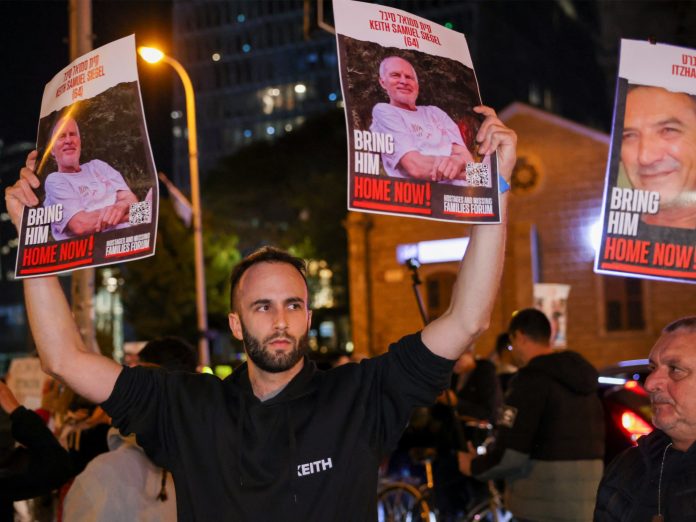
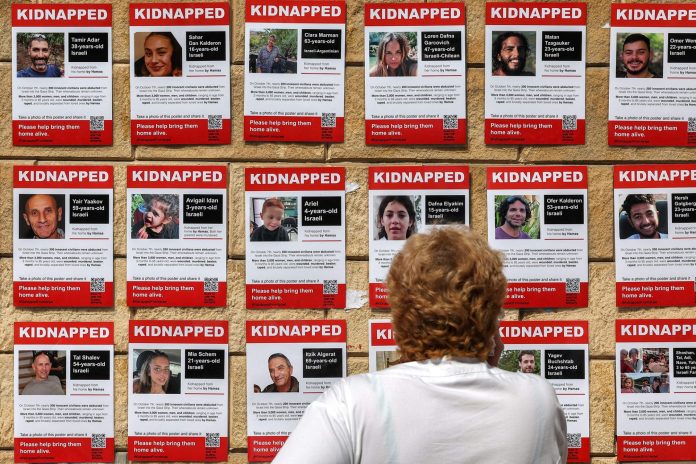
Israeli officials say about 24 living captives – including Edan Alexander, an American citizen – as well as the bodies of at least 35 others are believed to still be held in Gaza.

Confirmation of the talks comes days after the first phase of the Israel-Hamas ceasefire expired, with Israel pushing for an extension while Hamas insists on progressing to the second phase of the deal agreed in January.

The first phase saw Hamas release 33 hostages in exchange for Israel releasing more than 2,000 Palestinian prisoners and detainees.

Israel has said the proposal to extend the first phase of the truce was drafted by the US envoy for the Middle East, Steve Witkoff.

The new plan would require Hamas to release half its remaining captives in exchange for a ceasefire extension and a promise to negotiate a lasting truce. Israel made no mention of releasing more Palestinian prisoners – a key component of the first phase.

After the first phase expired, Israel on Sunday suspended humanitarian aid deliveries, including fuel, aid and medicine, into Gaza, as the government aims to put pressure on Hamas to accept the new terms – a move that the Palestinian group slammed as a violation of the original deal.

France, the United Kingdom and Germany on Wednesday warned Israel against using aid as a “political tool”, calling on it to ensure the “unhindered” delivery of humanitarian supplies to the war-ravaged Palestinian enclave.

“We call on the government of Israel to abide by its international obligations to ensure full, rapid, safe and unhindered provision of humanitarian assistance to the population in Gaza,” the countries announced in a joint statement.

“A halt on goods and supplies entering Gaza such as that announced by the government of Israel would risk violating international humanitarian law,” they noted, adding, “Humanitarian aid should never be contingent on a ceasefire or used as a political tool.”

The three European nations described the humanitarian situation in Gaza as “catastrophic”.
Poll shows almost half of Britons want Trump UK  visit cancelled after clash with Zelensky

Some 42 per cent of voters said the historic second invitation to Trump should be withdrawn amid growing outrage at the US administration’s increasingly critical stance on Ukraine.

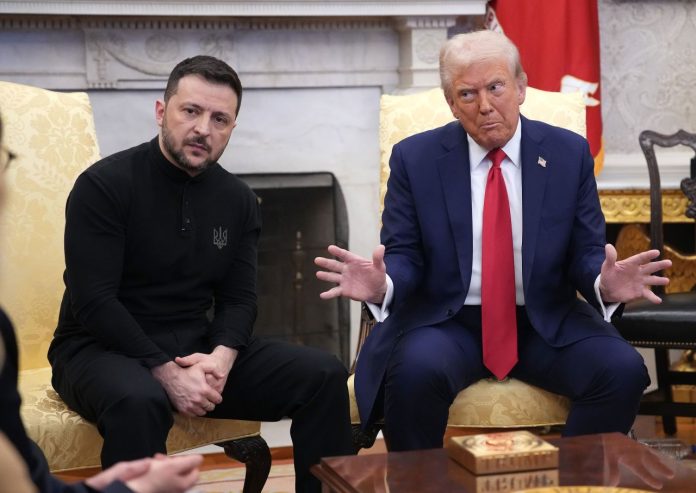
Sir Keir Starmer has faced pressure from across the political spectrum to withdraw the invitation, which he hand-delivered to Trump just a day before his Oval Office shouting match with Zelensky. That is only likely to increase since Trump’s decision to suspend military aid to Ukraine.

While two in five people said the invitation should be withdrawn, an overall majority (51 per cent) said it should not have been extended in the first place.

It comes as a petition by pro-democracy campaign group 38 Degrees calling for the visit to be axed passed 180,000 signatures.

Trump would become the first US president honoured with two state visits, with Sir Keir mounting a major charm offensive as she seeks to protect Britain from a global trade war.

But 38 Degrees warned that, because of the British public’s overwhelming support for Ukraine, the PM risks alienating voters by cosying up to the US president.

Chief executive of 38 Degrees Matthew McGregor said: “Since the Russian invasion three years ago, the British people have consistently shown an outpouring of support for the people of Ukraine. They have been clear that the UK must stand up for Ukraine, and that voters will back the PM if he does.

“But standing up for Ukraine means unequivocally standing up to Donald Trump right now. With the majority of Brits feeling he is undeserving of a second state visit … Keir Starmer should think long and hard about whether this state visit really should go ahead.”

The survey, conducted by Survation for 38 Degrees, also revealed Sir Keir’s backing for Zelensky after his White House clash with Trump made the public feel “proud to be British”.

The prime minister standing up for Ukraine on the world stage won him the support of 46 per cent of the public, who said it made them feel proud, while just 12 per cent said it did not.

And it contained a stark warning for Reform UK leader Nigel Farage, who was accused of “acting as Donald Trump’s spokesman in Britain” for defending the US president after the row.

It revealed President Zelensky as the most popular world leader out of a group also including Sir Keir, French president Emmanuel Macron, Trump and Vladimir Putin.

Zelensky had a 54 per cent approval rating, while Trump was on 24 per cent and Putin was on 11 per cent.

Farage blamed the Ukrainian president for having played the White House meeting “very badly”, and accused him of “bowling in” without a suit on and “showing no respect” for his American counterpart.

McGregor added, “After Nigel Farage’s comments earlier this week, this poll shows him well and truly out of step with public opinion, from his sympathetic comments towards Putin to his sneering at Zelensky’s sartorial style.”

Israel’s Gaza aid blockade could breach humanitarian law: E3

In a joint statement published on Wednesday, the foreign ministers of the United Kingdom, France and Germany called on the government of Israel to abide by its international obligations, and “to ensure full, rapid, safe and unhindered provision of humanitarian assistance to the population in Gaza”.

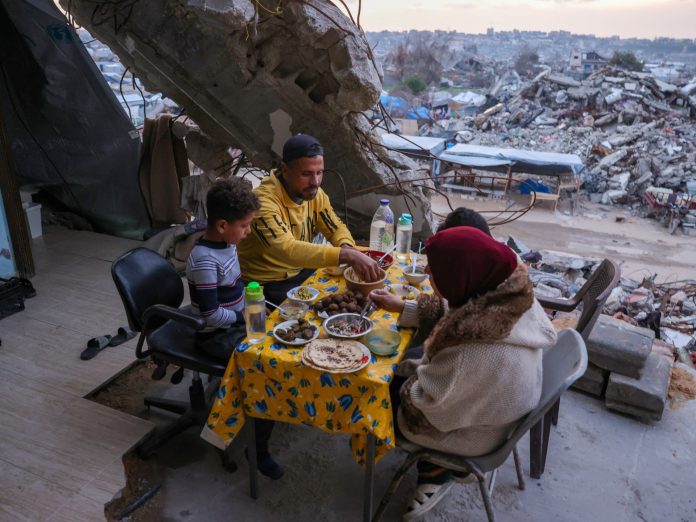
Israel blocked the entry of aid shipments to Gaza on Sunday, hours after the first phase of its ceasefire deal with the Palestinian group Hamas expired, raising fears of hunger and more hardships during the holy month of Ramadan that began over the weekend.

“A halt on goods and supplies entering Gaza, such as that announced by the Government of Israel would risk violating International Humanitarian Law,” the three ministers stated.

“Humanitarian aid should never be contingent on a ceasefire or used as a political tool,” the statement added, calling on all parties to uphold the ceasefire.

Separately, on Wednesday, five European members of the United Nations Security Council, including the UK and France, called on Israel to “immediately let humanitarian aid flow into the Gaza Strip”, urging parties “to find a way forward to the next phases of the ceasefire agreement and hostage release deal”.

Rights groups have accused Israel of crimes against humanity and violations of international laws for blocking aid in Gaza. Nearly 50,000 Palestinians have been killed and 70 percent of Gaza’s buildings and roads are damaged after 15 months of nonstop Israeli bombardment.

Hamas has accused Israel of reneging on the ceasefire that ended the Gaza war. Israel now wants to extend the first phase of the agreement by 50 days instead of entering into the second phase as agreed originally. Israel was supposed to withdraw its soldiers from the Philadelphi Corridor at the end of the first phase on March 1, but it has refused to do so. Trump’s Middle East envoy Steve Witkoff is reportedly expected to visit the region in the coming days to end the deadlock.

On Wednesday, the World Food Programme (WFP) announced it has food supplies for the Palestinian enclave to keep public kitchens and bakeries open for less than two weeks.

Rosalia Bollen, a spokesperson for the UN’s children’s agency, also said the block on humanitarian aid, including vaccines and ventilators for pre-term babies, “will have devastating real-life consequences” for children and their parents.

“If we’re unable to bring that in, routine vaccination will come to a standstill,” she continued, adding, “Neonatal units won’t be able to care for preterm babies, so this is a real-life consequence that we’ll be dealing with very, very soon if we’re unable to resume the aid supplies coming in.”

Bollen, who is in Gaza, said existing supplies have already been largely distributed throughout the enclave.

“The first phase of the ceasefire wasn’t just a pause in hostilities … it really was a lifeline for families here,” she continued, adding, “The mood here is very depressed; families that I speak with are deeply worried about what the future is going to hold.”

CIA confirms freeze of intelligence sharing with Ukraine

CIA

The development came just a day after several American media outlets reported that the US had suspended military assistance, including both the purchase of new weapons and shipments already in progress.

When asked by host Maria Bartiromo whether the US had “cut off” its cooperation with Ukraine, Ratcliffe said that US President Donald Trump had “asked for a pause” to see if Kiev was ready to work toward resolving the conflict with Russia.

“President Trump had a real question whether…Volodymyr Zelensky was committed to a peace process,” Ratcliffe said, claiming that the halt to assistance and information sharing contributed to Zelensky publicly stating that he was “ready for peace.”

On Tuesday, the Ukrainian leader said that Kiev was ready for an immediate POW release and a temporary ceasefire with a “ban on missiles, long-ranged drones, bombs on energy and other civilian infrastructure.” Last week, Trump told reporters that Zelensky needed to be ready for an immediate ceasefire before he could be welcomed back to the US following their Oval Office debacle on Friday.

”On the military front and on the intelligence front, the pause… allowed that to happen,” Ratcliffe continued, adding that he expected the US to resume cooperating with Ukraine soon.

The halt to intelligence sharing was “selective,” Sky News reported on Wednesday, citing a Ukrainian source. However, the move made it difficult for Ukraine to launch attacks against targets deep inside Russia, the source stated.

Washington reportedly also barred its allies from sharing with Ukraine, Financial Times reported on Wednesday, citing sources familiar with the matter. Recipients with assets inside Ukraine itself were likely to continue to pass on relevant information, the paper said, but Kiev would likely miss out on time-sensitive and high-value intelligence it needed to strike moveable Russian targets.

Trump and Zelensky had a heated verbal exchange on Friday, when the US president accused the Ukrainian leader of ingratitude and “gambling with World War III” by refusing to work towards a halt to hostilities.

Several US outlets, including Bloomberg and CNN, reported that Trump had paused military aid after the fall out. According to reports, the president’s order affected more than $1 billion in “arms and ammunition in the pipeline and on order.”

Moscow commented on the reports by saying that if the US were to suspend supplies altogether it would “probably be the best contribution to the cause of peace.”

Israel reports $2.5bn in damage from war with Hezbollah

Israeli Settlers

A report submitted to the government by Ze’ev Elkin, a minister in the Finance Minister, showed that 2,900 buildings were damaged in northern Israel during the conflict since October 2023, according to Israel’s Army Radio on Wednesday.

The report found that 19% of the damaged buildings were caused by the Israeli military activity in the region.

According to the report, 67,500 Israelis were evacuated in northern Israel since the outbreak of the conflict, with only 19,000 having so far returned to their homes.

A fragile ceasefire has been in place since Nov. 27, ending months of cross-border warfare between Israel and Hezbollah that escalated into a full-scale conflict last September.

Lebanese authorities have reported more than 1,000 Israeli violations of the ceasefire, including the deaths of at least 83 victims and injuries to 280.

Under the ceasefire accord, Israel was supposed to fully withdraw from southern Lebanon by Jan. 26, but the deadline was extended to Feb. 18 after Israel refused to comply, as it still maintains a military presence at five border outposts.

Oil minister: Turkmen gas starts flowing to Turkey via Iran

Iraq Gas

Paknejad said the contract which has made the gas swap possible has now been finalized, and the gas is flowing.

He added that over the past few days, this project has come to fruition, thanks to the efforts of the National Iranian Gas Company and other sectors involved in advancing the project.

Paknejad noted that this project is significant from various aspects, such as the amount of gas received in the northeastern region and the interactions with neighbors, namely Turkmenistan and Turkey.

The Iranian oil minister underlined that the deal will have a significant impact on Iran’s relations with Turkey and Turkmenistan, especially in terms exporting gas and other oil products.

Paknejad noted that the agreement is an important step toward strengthening Iran’s position as a regional energy hub and shows Tehran’s resolve to expand its energy diplomacy.

Trump says received an important letter from Zelensky

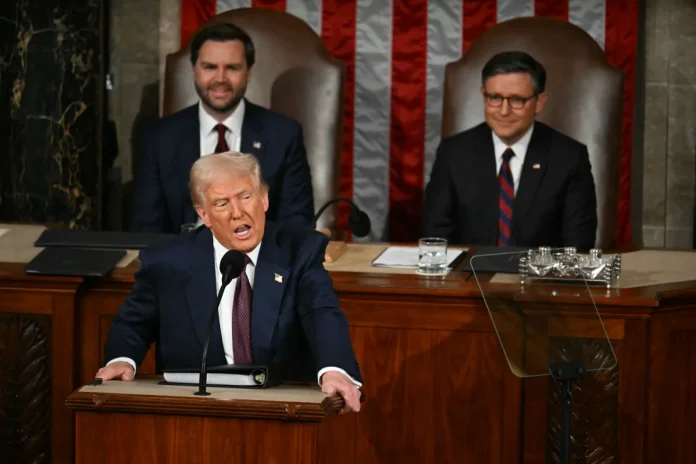
Multiple news outlets reported that the Trump administration ordered an immediate freeze on all U.S. military aid to Ukraine. The U.S. president barely referenced the decision in his first major address to lawmakers since returning to the White House, focusing largely on domestic issues.

When he mentioned the war and Washington’s role in supporting Ukraine, he avoided any direct mention of the aid freeze.

“The United States has sent hundreds of billions of dollars to support Ukraine’s defense,” Trump said.

“With no security, with no anything. Do you want to keep it going for another five years?”

That question was Trump’s only nod to the suspension of aid, which a White House official stated is meant to pressure Zelensky into peace negotiations.

Trump said in his address that he “appreciate(s)” Zelensky’s recent statements expressing Ukraine’s readiness for peace, but did not say whether or not the U.S. would resume weapons deliveries.

Zelensky has reiterated Ukraine’s commitment to the peace process in a post on X.

“Ukraine is ready to come to the negotiating table as soon as possible to bring lasting peace closer. Nobody wants peace more than Ukrainians,” he wrote.

Zelensky proposed initial steps toward de-escalation with Russia, including prisoner of war (POW) releases, a “truce at sea,” and a “truce in the sky” that would ban missiles, long-range drones, and bombs targeting civilian infrastructure.

He also noted Ukraine is ready to sign the critical minerals deal “at any time and in any convenient format.”

Trump said in his address to Congress that he received that same message in a letter from Zelensky. He read Zelensky’s statement aloud, apparently presenting the message as a sign of successful U.S. pressure on Kyiv. Trump added that his team had held discussions with Russia and received “strong signals” that Moscow is ready to make peace.

“Wouldn’t that be beautiful?” he added.

While Trump’s remarks on Ukraine and Russia were short on details, his comments indicated that he wants Europe to foot the bill for Ukraine’s defense.

“Europe has sadly spent more money buying Russian oil and gas than they have defending Ukraine,” he continued.

Trump likened U.S. spending on military aid to Ukraine to “taking candy from a baby” and expressed disbelief at the disparity between European and American aid packages. He repeated his hopes for an end to the war, saying “it’s time for the madness to stop,” but made no mention of sanctions against Russia or security guarantees for Ukraine.

The decision to halt aid came on the heels of a contentious meeting in the Oval Office between Zelensky, Trump, and U.S. Vice President JD Vance. The U.S. leaders berated Zelensky for continuing to stress Ukraine’s need for security guarantees, accusing him of being insufficiently grateful for American assistance.

Zelensky was ordered to leave the White House, and departed without signing the much-anticipated minerals deal between the U.S. and Ukraine. Trump later claimed that Zelensky “is not ready for peace.”

The suspension affects over $1 billion in arms and ammunition deliveries. It halts not only future aid but also weapons already in transit, including shipments on aircraft and ships, as well as equipment awaiting transfer in Poland.

Polish Prime Minister Donald Tusk confirmed that the freeze had gone into effect, based on reports from the Ukrainian-Polish border.

The White House has not specified what steps Ukraine must take to restore the flow of weapons.

Trump’s foreign policy moves in recent weeks signal a seismic shift in U.S. attitudes toward Ukraine, Russia, and Europe. Trump has conceded to Russian demands before negotiations even begin, initiated direct talks with Moscow while excluding Kyiv, and echoed Kremlin talking points — including blaming Ukraine for starting the war and calling Zelensky a “dictator.”

The Kremlin has applauded Trump’s policy shift, saying it “largely aligns” with Russia’s interests.

Trump’s address to Congress comes six weeks after the start of his second term in the White House. In a post to Truth Social late on March 3, Trump said he would use his address to “tell it like it is.”

Israel’s Shin Bet investigation finds government-wide policy failures leading to Hamas October 2023 attack

Israel Hostage

The Shin Bet largely blames the attacks on the government’s policy of maintaining “quiet” in Gaza – given the lack of any rocket launches or other activity by fighting factions in Gaza for more than a year – as well as what it describes as the transfer of Qatari funds to Hamas’s military wing, the Qassam Brigades, in order to build up its ranks.

The Shin Bet further pointed to “disturbances on the Temple Mount, the treatment of Palestinian prisoners, and the perception that Israeli society had weakened due to the erosion of social cohesion [in the wake of the judicial overhaul]” as factors that led to the attacks.

While the Shin Bet itself said it had long criticised the “arrangement-based reality” that Hamas was deterred and therefore quiet in Gaza, it failed to identify the group’s plan to attack Israel despite possessing relevant information about its growing strength.

The investigation also revealed that the division of responsibility between the Shin Bet and the Israeli military “was not suited to the situation on the ground”.

The acknowledgment came days after an “internal investigation” revealed that, despite possessing intelligence on Hamas’ plans, indicators had not been perceived as immediate threats.

The probe carried out by the Israeli military criticized the regime’s overconfidence in intelligence assessments and its underestimation of Hamas’ capabilities, mistakes which contributed to the devastating outcome for the regime.

After launching the strike, Hamas retained the hundreds-strong Zionists in captivity, conditioning their release on the freedom of numerous Palestinian prisoners, thousands of whom have returned home so far in exchange for a handful of the captives.

Besides failing to confront the resistance fighters storming the occupied Palestinian territories during the operation, the regime signally failed to realize its intended goal of “eliminating” Hamas during a subsequent war of genocide it launched against the Gaza Strip, despite its killing more than 48,400 Palestinians, mostly women and children, throughout the brutal military onslaught.

The recent revelations have, meanwhile, set off growing calls within the Israeli regime for a comprehensive inquiry to examine the failures of both security agencies and political officials in preventing the operation.

However, Prime Minister Benjamin Netanyahu has yet to commit to such an investigation, leading to increased scrutiny and demands for accountability.

Ukraine president says White House clash ‘regrettable’, proposes steps for peace

Zelensky

The statement follows days of mounting pressure from Washington, with senior U.S. officials signaling that Zelensky should apologize for the heated Oval Office exchange with Trump and Vice President JD Vance.

The meeting ended without a planned U.S.-Ukraine mineral agreement being signed.

Zelensky reaffirmed that Ukraine is ready to sign the agreement on minerals and security “at any time and in any convenient format.”

“We see this agreement as a step toward greater security and solid security guarantees, and I truly hope it will work effectively,” he posted on X.

Zelensky also responded to Trump’s latest criticism of his comments on March 2, in which he described peace negotiations as being in the earliest stages and a final deal as “very, very far away.”

Trump seized on the remarks as alleged proof that Zelensky does not want peace, posting on Truth Social that “America will not put up with it for much longer.”

“Ukraine is ready to come to the negotiating table as soon as possible to bring lasting peace closer. Nobody wants peace more than Ukrainians,” Zelensky said.

He suggested that the initial steps toward de-escalation could include prisoner of war (POWs) releases, a “truce in the sky” banning missiles, long-range drones, and bombs targeting civilian infrastructure, as well as a “truce at sea.”

“Then we want to move very fast through all next stages and to work with the U.S. to agree a strong final deal,” Zelensky added.

The remarks come as several media outlets reported that Trump ordered an immediate freeze on all military aid to Ukraine, halting over $1 billion in weapons and ammunition deliveries.

Trump’s senior adviser, Jason Miller, told CNN that the aid suspension is part of a pressure campaign to push Zelensky into negotiations with Russia.

U.S. National Security Advisor Mike Waltz told Fox News that Washington expects Zelensky to show “regret” for the Oval Office dispute and commit to signing the mineral deal.

US VP dismisses criticising Britain, France over Ukraine peacekeeping proposal

Vance, in an interview with Fox News Channel’s Sean Hannity, said the economic pact with Kyiv sought by President Donald Trump “is a way better security guarantee than 20,000 troops from some random country that hasn’t fought a war in 30 or 40 years”.

Vance took to X on Tuesday to clarify his remarks, claiming that it was “absurdly dishonest” to suggest he had been referring to the UK and France.

The UK and France are the only countries that have publicly committed to a European peacekeeping force in Ukraine as part of broader continental efforts to secure a deal between Moscow and Kyiv.

“I don’t even mention the UK or France in the clip, both of whom have fought bravely alongside the US over the last 20 years, and beyond,” Vance posted on X, after his remarks drew an angry response from politicians and veterans in both countries, who said he was dishonouring hundreds of troops killed while fighting alongside US forces in Afghanistan and Iraq.

However, he went on to question the viability of what British Prime Minister Keir Starmer earlier called “a coalition of the willing” to police any ceasefire in Ukraine.

“But let’s be direct: there are many countries who are volunteering (privately or publicly) support who have neither the battlefield experience nor the military equipment to do anything meaningful,” added Vance in the social media thread.

Vance’s criticism follows a dramatic row in the Oval Office last week during a visit by Ukrainian President Volodymyr Zelensky to sign a minerals deal with Washington. Zelensky left the White House without signing the deal.

Trump, who has been accused of sidelining both Kyiv and European allies as he moves to negotiate directly with Russia’s President Vladimir Putin, has since cut off military aid to Kyiv.

Vance’s latest broadside drew criticism in the UK and France.

French President Emmanuel Macron’s Renaissance party said on X, “The French and British soldiers who died fighting terrorism, who fought and sometimes died alongside American soldiers, deserve better than the disdain of the American vice president.”

In the UK, Conservative MP Ben Obese-Jecty, who fought in Afghanistan and Iraq, stated, “The disrespect shown by the new US vice president to the sacrifices of our service personnel is unacceptable.”

Obese-Jecty cited Mr Vance’s description of serving as a Marine Corps journalist in Iraq in his memoir, Hillbilly Elegy. The vice president had noted he “was lucky to escape any real fighting”.

Johnny Mercer, a British veteran and a former junior defence minister, called Vance a “clown”.

Vance has also disputed that the Trump administration was not pressuring Moscow to bring it to peace talks, arguing that the existing sanctions are straining Russia’s economy.

“Well, I don’t think that’s right, actually,” Vance replied to a journalist who suggested that Washington is exerting pressure on Kyiv but not on Moscow.

“We still have a number of sanctions that are placed on Russians. We do believe the Russians, economically, are struggling because of this conflict,” he added.

The comments came the same day that the US froze crucial military assistance for Ukraine in an attempt to pressure Kyiv to the negotiating table.

The decision came after a public dispute between Zelensky, Trump, and Vance in the Oval Office,  after which US leaders berated the Ukrainian president for not being “ready for peace” and supposed lack of gratitude.

The aid freeze raised concerns among Kyiv’s other partners and was welcomed by the Kremlin, whose all-out war against Ukraine entered its fourth year.

The US has intensified diplomatic outreach to Moscow, holding two rounds of bilateral talks last month. The Trump administration has so far kept the sanctions against Russia imposed by the Biden administration in place, but the US media reported that the White House is considering easing some of them as part of a peace process.

“We believe it is in Russia’s best interest, and the United States’ and Ukraine’s best interest, to bring this conflict to a close. We believe applying pressure to everybody to stop the killing. That’s what the president’s policy is,” Vance continued.