Tuesday, December 30, 2025
Home Blog Page 3802

1000 Orthopedic Surgeries Done in Iran’s Quake-Hit Regions

1000 Orthopedic Surgeries Done in Iran’s Quake-Hit Regions

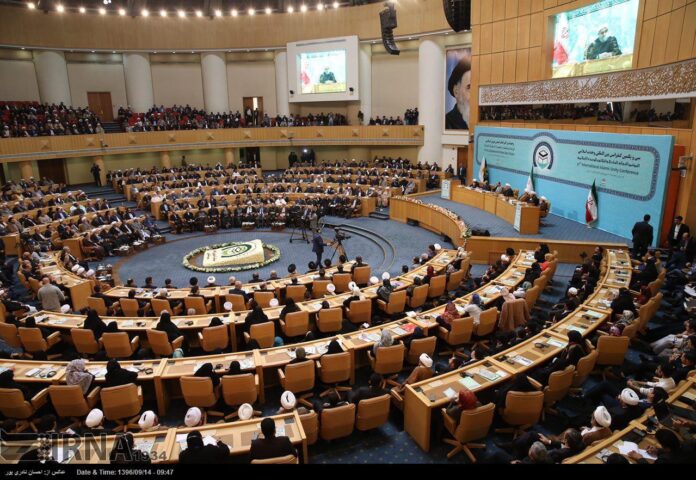
In an address to reporters on the sidelines of the 25th Congress of Orthopedics, Razi said Iranian orthopedic surgeons rushed to the quake-hit regions and immediately began to offer medical services to the wounded.

“So far about 1000 orthopedic surgeries have been conducted in the quake-hit regions. The number does not include the surgeries conducted on the wounded in Tehran’s different hospitals,” he noted.

Razi went on to say following the earthquake, Iran’s Orthopedic Surgeons Association held an emergency meeting with the Islamic Republic of Iran Medical Council to discuss ways to offer services to the quake-hit victims. “An emergency team was dispatched immediately to the region.”

According to Razi, the association also organized different emergency teams and established a financial fund to support the wounded. “We purchased the required medical equipment with the money gathered in the fund.”

Head of Iran’s Orthopedic Surgeons Association concluded to cope with natural disasters like earthquakes, the association has established an emergency committee assigned with offering help and services to the victims. “The committee is regularly upgraded with the latest scientific and technological findings.”

Gen. Soleimani to Iran Leader: ISIS Completely Defeated in Iraq, Syria

Gen. Soleimani to Iran Leader: ISIS Completely Defeated in Iraq, Syria

Commander of the Islamic Revolution Guards Corps’ Quds Force Major General Qassem Soleimani has, in a letter to Leader of the Islamic Revolution Ayatollah Seyyed Ali Khamenei, congratulated him on the defeat of ISIS terrorists in Iraq and Syria. The full text of the message follows.

In the name of Allah, the Compassionate, the Merciful

Verily, We have granted thee a manifest Victory (Translator’s note: The statement is a verse from the Holy Quran)

To the respected and brave Leader of the Islamic Revolution

Ayatollah Seyyed Ali Khamenei

Hello and greetings,

Six years ago, a dangerous [wave of] sedition similar to the ones during the era of Imam Ali, which stripped Muslims of the opportunity to truly understand and savour pure Islam, swept across the Islamic world like a tornado, but this time it was complicated and tainted with the poison of Zionism and hegemony. The dangerous and poisonous sedition was triggered by the enemies of Islam in a bid to start the flames [of tension and crises] in the Muslim world and pit Muslims against one another. An evil move under the title “The Islamic State of Iraq and the Levant (ISIL)” (also known as the Islamic State of Iraq and Syria, ISIS) managed, in the very early months, to mislead dozens of Muslims youths from both countries [into joining it] in a very effective manner and brought a very dangerous crisis upon Iraq and Syria. It captured hundreds of thousands of kilometres of the territory of these countries along with thousands of villages, cities and key provincial capitals and destroyed thousands of workshops and factories and the countries’ infrastructure such as roads, bridges, refineries, wells, oil and gas pipelines, power stations and other facilities. They also destroyed with bombs or burned important cities along with their invaluable historical artefacts and national civilization.

Although the extent of the damage cannot be assessed, initial surveys put the losses at $500 billion.

In this incident, very heinous crimes, which cannot be displayed, were committed, namely the decapitation of children, skinning men alive in front of their families, taking innocent girls and women captive and raping them, burning people alive and the mass beheading of hundreds of youths.

A number of the Muslim people of these countries, perplexed by the poisonous storm, were killed by the Takfiri criminals’ razor-thin daggers, and millions of others abandoned their homes and were forced to flee to other cities and countries.

Amid this dark sedition, thousands of Muslims’ mosques and holy centres were destroyed or devastated, and in some cases they (ISIS terrorists) detonated mosques with Imams and worshippers inside.

More than six thousand deceived youths blew themselves up in the name of Islam in suicide attacks or with explosives-laden vehicles at Muslims’ squares, mosques, schools, and even hospitals and public places. As a result of these criminal acts, scores of innocent men, women and children were martyred.

By the admission of the highest American official who is currently the president of the country, all these crimes were engineered and orchestrated by authorities and organizations affiliated with the United States. Moreover, the incumbent US leaders are pressing ahead with this approach.

In addition to God’s grace and the special attention of the Prophet Mohammad and his respected Household which thwarted this dark and perilous plot, the wise leadership and prudent guidelines of Your Excellency and of senior religious figure Ayatollah Ali Sistani resulted in the mobilization of all resources to counter this poisonous hurricane.

Incontrovertibly, the resistance of the Iraqi and Syrian governments and the perseverance of the two countries’ armies and youth, especially the Popular Mobilization Units, and the youth of other countries together with the strong and pivotal presence of Hezbollah led by Seyyed Hassan Nasrallah played a pivotal role in defeating this dangerous phenomenon.

Definitely, the invaluable role of the nation and government of the Islamic Republic of Iran, especially the respected president, parliament, the Ministry of Defense and military, law enforcement and security agencies of our country in supporting the governments and nations of the above-mentioned countries should not be ignored.

I, as a humble soldier instructed by Your Excellency [to serve] in this battlefield, with the completion of the operation to liberate Abu Kamal as the last stronghold of ISIS, and the lowering of the flag of this American-Zionist group and the hoisting of the Syrian flag, declare the end of the domination of this cursed wicked entity, and on behalf of all commanders and little known devotees [serving] on this scene and thousands of Iranian, Iraqi, Syrian, Lebanese Afghan and Pakistani martyrs and troops who were injured and disabled while defending holy shrines and who sacrificed their lives to safeguard the lives and honour and sanctities of Muslims, I congratulate Your Excellency and the great Iranian nation and the oppressed nations of Iraq and Syria and other Muslims of the world on this very big an determining triumph, and I kneel before God Almighty and bow my head in supplication to thank Allah over this great victory.

US Pressuring Iran’s Oil Customers

Iran’s Oil Revenues Increase by 49% despite US Bans

A study of the oil market shows US keeps exerting pressure on buyers of petroleum form Iran, so much so that Washington is ready to sell them oil at a cheaper price. The pressure made South Korea decrease its oil imports from Iran while Poland has not given in, yet. The Persian-language Fars News Agency has, in an article, analyzed the development.

Due to a drop in production, Iran has decreased its exports of crude oil and gaseous condensates to the Asian market.

Moreover, based on the figures presented by international energy centres, South Korea’s petroleum exports from Iran in October dropped by 9.5 percent over the previous month.

South Korea is one of the major buyers of Iran’s oil, which imported 1.65 million tonnes of petroleum from Iran in October equal to 390,675 barrels per day.

The figure shows a 1.83 million-tonne drop compared to the figure in September. Still, the figure is around 83 percent more than that in 2016.

Some energy research centres say the major cause of decrease in Seoul’s petroleum sales from Iran was US pressure on South Korea, and that even US President Donald Trump’s trip to the country contributed to it. It seems that Washington has undertaken to meet South Korea’s need for hydrocarbons if it stops purchasing energy from Iran.

Apparently, US pressure is not limited to the countries which buy petroleum form Iran. Washington exerts pressure on European buyers, too, to make them decrease their oil imports from Iran.

The Americans, seeing that Poland is turning into the biggest European country buying oil from Iran, have rolled up their sleeves and concluded exports contracts with buyers of oil from this country.

Interestingly enough, the Poles have seized the opportunity and seek to get discount from Washington in return for not buying oil from Iran, something that Washington wants.

However, this trend has not kept Poland from buying oil from Iran. Under the current circumstances, due to growing divisions between the Iraqi Kurdistan region and Baghdad government over the transfer of oil, demand is growing in the European market for different types of sour oil. Accordingly, Poland’s PKN Orlen company has once again demanded to buy petroleum from Iran.

PKN Orlen together with Poland’s second oil refining company called Lotus bought two consignments of crude from Iran, each containing one million barrels, in 2017. After purchasing and testing the shipments, they have once again expressed willingness to buy oil from the National Iranian Oil Company.

According to oil sources, PKN Orlen bought oil from Iran to be loaded on November 24-25, and the purchase came to diversify Poland’s oil imports basket.

Currently, Poland is very dependent on Russia’s Urals oil, but the country’s two oil refining firms have slowly begun to diversify their oil supply resources. Accordingly, Russia’s oil exports have dramatically decreased this month from the Primorks terminal, the place where the largest amount of the Urals oil is loaded, due to repair work at the refinery.

On the other hand, while Poland’s PKN Orlen has put on its agenda talks to buy oil from Iran in the long run, other oil refining companies in Eastern Europe such as Hungary’s Mol, Belarus’ state oil company BNK, and Austria’s OMV have imported oil from Iran only once over the past year.


Terrorists Shell Russian Embassy in Syria

Terroorists Shell Russian Embassy in Syria

“In a mortar shelling of Damascus conducted from terrorists’ positions at about 10:35 local time on November 20, a shell hit the outer fence of the Russian embassy to Syria, which is located close to its dwelling compound,” read a statement released by the Russian Foreign Ministry on Monday.

It added that a 122-millimeter shell was used in the attack which damaged the building’s wall, electricity lines and water supplies.

“No one from among the embassy’s employees was hurt,” it added.

It also noted that Russia expects Western countries at the UN Security Council to properly evaluate the incident.

“We hope that our so active on the Syrian trajectory Western colleagues in the UN Security Council will have the heart not to keep silent but to give proper public evaluation of the incident in which the lives of Russian diplomats were jeopardized,” it stated.

Terrorists Shell Russian Embassy in Syria

It also stressed that the incident will not affect the country’s resolve in its battle against terrorism.

“We want to confirm once again that such provocations don’t influence Russia’s resolve to complete the destruction of a terrorist hotbed in the Syrian Arab Republic, to contribute to restoration of peace and security in Syria, strengthening of its sovereignty, unity and territorial integrity,” it added.

“We resolutely condemn this new attack by terrorists against the Russian diplomatic mission in Damascus,” it concluded.

The Russian diplomatic mission in war-torn Syria has so far come under several militant attacks, including a number of mortar attacks. No casualties, however, were reported in either of the incidents.

Terrorists Shell Russian Embassy in Syria

Russia has been engaged in an anti-terror campaign in Syria since September 30, 2015, based on a request from the Damascus government. According to analysts, the campaign has largely been successful in helping Syrian government forces dislodge foreign-sponsored terrorists from many regions across the country.

The foreign-sponsored conflict in Syria, which started in March 2011, has claimed the lives of more than 400,000 people, according to an estimate by UN Special Envoy for Syria Staffan de Mistura.

Terrorists Shell Russian Embassy in Syria

Saudi-backed Syrian opposition head quits

Meanwhile, the director of the Saudi-backed Syrian opposition, the so-called High Negotiations Committee (HNC), has stepped down after nearly two years of chairing the umbrella group.

Riad Hijab (seen above) released a statement via social media claiming that he was forced to leave the post, without giving specific reasons for the move.

Several other HNC officials also announced they were withdrawing from the group along with Hijab.

Hijab’s resignation comes a several days ahead a fresh round of Syria peace talks.

US Helped ISIS Terrorists in Syria’s Bukamal: Nasrallah

Sayyed Hassan Nasrallah

Sayyed Hassan Nasrallah made the remarks in a televised address to the Lebanese nation in capital city of Beirut on Monday.

Nasrallah noted that recapturing Bukamal was a major victory over Daesh, because Bukamal was the last Syrian city occupied by Daesh.

“The US helped Daesh as much as it could in Bukamal short of directly engaging forces that fought to liberate the town from Daesh,” the Hezbollah leader noted.

Nasrallah went on to note that the US provided Daesh terrorists with full air cover in Bukamal.

The US sent its drones to Bukamal and provided Daesh with accurate information about what was going on, Nasrallah said, adding that American forces also waged electronic warfare against forces that were fighting to liberate Bukamal.

American forces also provided air transfer for Daesh commanders and facilitated their escape to eastern shores of the Euphrates, he said. The Hezbollah leader stated that even Turkey’s President Recep Tayyip Erdogan slammed the US for helping Daesh.

Nasrallah emphasized that recapturing Bukamal led to unity of Syria and ended Daesh’s self-proclaimed state in the country.

US Helped ISIS Terrorists in Syria's Bukamal: Nasrallah

Following recent victories in Iraq and Syria, he added, the military structure of Daesh collapsed in the two countries and Iraqi forces have reached the Syrian border.

Hezbollah leader noted that the victory over Daesh was victory of Islamic values over terrorists’ savagery.

Nasrallah also highlighted the role played by Commander of the Islamic Revolution Guards Corps’ Quds Force Major General Qassem Soleimani in anti-terror operations in both Iraq and Syria.

He noted that Soleimani was commanding anti-Daesh operations in the two countries at the frontline and was never a commander to issue orders from behind the lines.

Elsewhere in his remarks, Nasrallah referred to the latest meeting of the Arab League foreign ministers in Cairo, who designated the Lebanese Hezbollah as a terrorist group, saying that this was not the first time that such accusations were leveled against Hezbollah.

Arab League Secretary General Ahmad Aboul Gheit announced at a press conference in the Egyptian capital of Cairo on Sunday that Arab states had agreed to designate Lebanon’s Hezbollah resistance movement a “terrorist organization.”

The Arab League’s extraordinary general meeting on Sunday was held at the request of Saudi Arabia, which has assumed an aggressive stance against Hezbollah for its alleged links to Iran, Riyadh’s powerful rival in the region. Riyadh associates Hezbollah with Iran and has been trying to weaken the resistance movement, which is Lebanon’s de facto deterrent force against Tel Aviv.

In its concluding resolution, the Arab League announced that Arab foreign ministers, excluding those of Lebanon and Iraq, would hold Hezbollah responsible for supporting “terrorist groups” across the region.

US Helped ISIS Terrorists in Syria's Bukamal: Nasrallah

Nasrallah said the Arab League statement has labeled Hezbollah’s council, which is part of the Lebanon’s government, as a terrorist outfit, alleging that it provides missiles to terrorist groups in the region.

He added that accusations about Hezbollah sending missiles to regional countries were false and undocumented, emphasizing that the group has never sent any missiles or even light weapons to Kuwait, Yemen, Iraq or Bahrain or any other country in the region.

The leader of Hezbollah went on to say that the Arab League has warned Lebanon that if Hezbollah is not disarmed, security of the country would be in jeopardy.

Hezbollah rejected the accusation, noting that the main threat to security of Lebanon was the Zionist regime of Israel.

He added that the resistance front’s weapons were the main factor restoring security and stability to Lebanon, because they were used for defensive purposes in the face of the Israeli aggression.

Nasrallah emphasized that Hezbollah’s weapons were used only against terrorist groups such as Daesh and posed no threat to security of Lebanon.

US Helped ISIS Terrorists in Syria's Bukamal: Nasrallah

Nasrallah stated that the main reason behind the recent Arab League meeting was not to discuss the issue of Palestine or other problems facing the Islamic world, but its main reason was the recent missile attack against a Saudi airport near the country’s capital, Riyadh.

Refusing Saudi Arabia and Arab League’s claims that the missile was provided to Yemeni Ansarullah fighters by Iran or the Lebanese Hezbollah, Nasrallah said Iran or Hezbollah had not sent any missiles to Yemen and Yemeni forces made their own missiles in the country.

He categorically rejected Arab League’s claims in this regard, noting that Saudi Arabia and its allies must admit that they have been defeated by Yemeni forces in their war of aggression against the country.

Nasrallah emphasized that Arab countries must put an immediate end to their support for terror groups, and do not fill the Middle East region with such outfits.

He reiterated that no member of Hezbollah was involved in the November 5 Yemeni missile strike against King Khalid International Airport of Riyadh.

The Hezbollah leader then took the Arab League to task for failing to address Saudi Arabia’s devastating aerial bombardment of the “Arab country of Yemen,” saying, “Saudi Arabia is bombing Yemeni people day and night.”

US Helped ISIS Terrorists in Syria's Bukamal: Nasrallah

Strongly denouncing the Riyadh regime over perpetrating outrageous atrocities against millions of “Arab Muslims” in Yemen, Nasrallah lashed out at the Arab world’s “deafening silence” over the grim situation in Yemen.

“The turmoil we are witnessing in the Arab world is a cover for the announcement of normalization of relations with Israel,” he commented.

Nasrallah then called on Arabs to do their best to maintain their national unity in the face of all divisive efforts.

The Hezbollah secretary general also praised Lebanese officials and politicians for their firm stance regarding Prime Minister Saad Hariri’s shock resignation, calling on him to return to Lebanon as soon as possible.

Angels Living in Earthquake Ruins

Watching the innocent faces sitting or walking on the ruins which used to be their homes, the viewer is inspired by a mixed feeling: On the one hand the desperate struggle of these desperate souls against the violent side of the world and on the other hand, the strength of life glittering in the eyes of these little angels.

Here are Tasnim’s photos of these little angels:

Iran Urges UN to Play Greater Role in Resolving Afghanistan Problems

Yamamoto, who is visiting Iran as part of his regular negotiations with the Iranian officials, held talks with Araqchi on Monday. During the talks, the two sides discussed Afghanistan’s situation.

Araqchi highlighted the significant role of the neighbouring states in resolving Afghanistan’s problems and expressed Iran’s readiness to contribute to related efforts.

He also reiterated that Iran expects the UN to play a leading role in resolving Afghanistan’s problems and pressing ahead with the peace process and national reconciliation in the war-stricken country.

In turn, Yamamoto elaborated on the security situation of Afghanistan as well as the latest international attempts to press ahead with peace process and national reconciliation in the war-torn state. He also called for international cooperation to achieve the mentioned goals.

Iran’s General Soleimani Led Bukamal Liberation: Report

“Syrian army backed by its allied forces in the Axis of Resistance including IRGC, Lebanon’s Hezbollah, Fatemiyoun, Zeinabioun and Haidarioun managed to fully liberate the border town of Bukamal from ISIS and Major General Soleimani personally led the operation,” said a report by Al Mayadeen TV.

Earlier, reports said the Iranian commander paid an unexpected visit to the IRGC forces deployed in Bukamal town.

The strategic town of Bukamal is in Syria’s eastern province of Deir ez-Zor and on the border with Iraq. Reports say the self-proclaimed ISIS governor of Bukamal, known by the name Abu Hasan al-Iraqi, had fled from the town to the eastern bank of the Euphrates River.

Syrian army soldiers declared victory over ISIS in Bukamal earlier this month, but the terrorists then staged a counter-attack using sleeper cells hidden in the city.

Iran FM, EU’s Schmid Discuss Bilateral, Regional Issues

Arriving in Tehran at the top of a high-ranking European delegation to take part in the third round of political talks between Iran and the European Union, Schmid sat for talks with Iranian foreign minister on Sunday.

During the meeting, Schmid first briefed Zarif on her talks in Tehran. Then the two sides discussed the general political situation in the regional states including Syria, Yemen, Qatar and Lebanon and stressed the need for continuation of political talks between Iran and the European bloc to cope with the current political challenges in the region.

The Joint Comprehensive Plan of Action (JCPOA) was among other issues discussed by the two officials. Schmid reiterated the general stance of the EU towards the nuclear deal saying all members of the union call for the full implementation of the deal between Iran and world powers.

For his part, Iranian foreign minister expressed Tehran’s interest in continuation of talks and exchange of views with the European Union in various fields.

“Revival of Silk Road to Bring Iran Tremendous Benefits”

What follows is the full text of Hamidian’s article published by Khabar Online news agency:

The Silk Road, as the most important trade route, has served as a link between the east and west of the world for centuries, running across China, India, Iran, Egypt, Saudi Arabia and Eastern Europe. To secure higher economic growth as well as new and stable markets for its exports and also in order to supply cheaper exports, Chinese President Xi Jinping proposed the idea of reviving the Silk Road under an initiative called “One Belt, One Road” in 2013. In this proposal, Iran is one of the countries that Beijing has an eye on due to the numerous features the Islamic Republic enjoys. After the initiative was put forward, different countries showed various reactions. India is one of the countries opposing the plan basically due to the China-Pakistan Economic Corridor (CPEC) project. The corridor is one of the most important parts of China’s “One Belt, One Road” initiative and runs across the disputed Kashmir region, which is claimed by both India and Pakistan, but is currently under Islamabad’s control. The United States is another country which might go into action if it sees its interests are at stake due to the initiative. The US and China have extensive trade relations. The economic growth of China and that of the US are interdependent. American firms have invested in China, which, in turn, needs America’s technologies as the Asian nation is lacking in state-of-the-art knowhow. Therefore, the economic growth of China and that of America are inextricably intertwined, and the US will not interfere as long as China’s political growth does not pose a threat to US politics.

Three possible routes have been envisioned for the Silk Road: The first route is China-Pakistan- Gwadar, the second one China-Russia-Europe and third route would cross China, Turkmenistan, Iran and Turkey. As the shortest route is the one passing through Iran, the country should seize the opportunity and make the most of it by closely monitoring the situation. Due to the following reasons, Iran is one of the key options for the plan.


Suitable Geographical, Strategic Situation

Iran has sea borders with 15 countries. Also, a large part of the most important international corridor which links northern Europe, Scandinavia and Russia to countries in the Persian Gulf region, Indian Ocean and Southeast Asia, passes through Iran. This shows Iran used to lie on the transit route and would take advantage of it.


Rich Oil, Natural Gas Resources

With its rich petroleum and natural gas reserves, Iran is a key supplier of crude oil to China. If the new Silk Road runs through Iran, this demand will increase, and Iran will need to seize the opportunity to maintain the market for its oil exports and at the same time process petroleum products to meet other demands in the project. As a founder of the Asian Infrastructure Investment Bank (AIIB), Tehran has somehow won China’s backing for the Silk Road route to run through Iran.

Although Iran has suitable conditions to lie on the route, there are impediments to that as well. Among the key hurdles are the problems with road, rail and air infrastructure, which does not measure up to international standards. To remove the obstacles, Iran needs massive investment by the private and public sectors as well as foreign loans. The link between Iran’s private sector and other regional countries will the set the stage for trade with Iran. Another hurdle which will create problems for Iran both during the implementation of the initiative and afterwards is the high end-cost of domestically produced commodities compared to foreign goods. Given Iran’s dependence on oil revenues and existence of the Dutch disease, the country’s non-oil exports will have high costs and will be unable to compete on world markets. If this problem is not solved, Iran will not be able to take advantage of the opportunity that it would get due to the Silk Road.


Iran should also remain on the watch for the Orient’s domination over the country and utilize the advantages of the East while maintaining its Western trade rivals and keep cordial relations with them


If the Silk Road does run through Iran, the country will face opportunities and threats. The most important advantages for Iran lying on the Silk Road will be higher economic growth, securing regional trade, receiving new demand and creation of more job opportunities, provision of goods at lower costs, prices becoming more competitive, industrialization and modernization, development of the tourism industry, reinforcement of security and the war on terrorism, preservation of natural habitats which lie on the Silk Route, a rise in cultural exchanges, securing the market for goods such as carpets, handicrafts, pistachios, saffron, medicinal herbs, etc. in accordance with international standards, identifying the tastes of consumers and the creation of international as well as Iranian brands, gaining access to cutting-edge technology, and so on and so forth.

While having an eye on the above-said advantages, Iran should openly and farsightedly monitor the situation in order to get connected to China’s economic belt while preserving its strength. One of the dangers threatening Iran is its cybersecurity as China has one of the most sophisticated cybersystems in the world. Iran should also remain on the watch for the Orient’s domination over the country and utilize the advantages of the East while maintaining its Western trade rivals and keep cordial relations with them. All of the above require national determination and giving more leeway to the private sector. By ensuring further stability and security, the Iranian government can boost foreign investment, so, by taking advantage of the Road Silk initiative, Iran will be able to achieve the goals it has envisioned for the country.