Friday, April 24, 2026
Home Blog Page 3882

Iranian Honey Ranks 3rd in Int’l Beekeeping Event

With efforts made by the Iranian National Beekeeping Support Fund, a bronze medal was given to Iranian honey in the Commercial Honey Section of the 45th APIMONDIA, a Farsi report by IANA said.

APIMONDIA or International Federation of Beekeepers’ Associations promotes scientific, ecological, social and economic apicultural development in all countries and the cooperation of beekeepers` associations, scientific bodies and of individuals involved in apiculture worldwide.

The name APIMONDIA is a compound word made of two words; ‘api’ referring to honey bees, and ‘mondia’ referring to the world.

Iran’s achievement in the 45th APIMONDIA reveals that the Iranian honey occupies a significant place in the honey market across the world. The new medal will pave the way for more presence of the Iranian honey in the international markets.

It’s noteworthy that the Iranian honey was sent from Lorestan region.

The seven-day APIMONDIA kicked off on September 29. The participants included China, Turkey, the US, the UK, India, Nigeria and Germany.

Iranian beekeepers had 12 booths in this exhibition.

‘Iran at Forefront of Tackling Terror, Human trafficking’

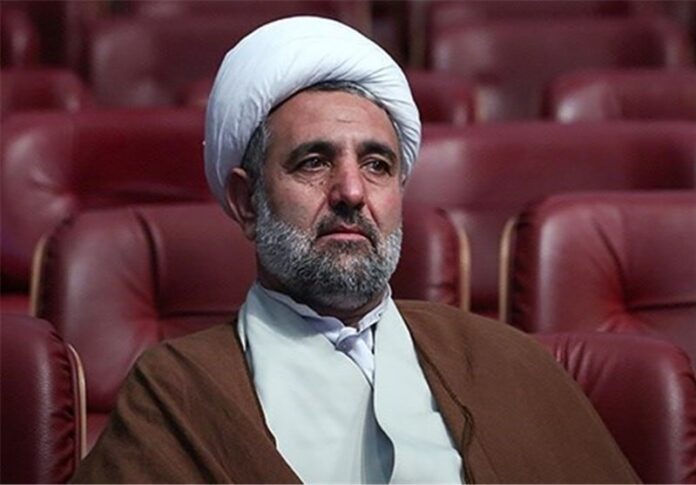
Iranian lawmaker Mojtaba Zonnouri says the Islamic Republic is at the forefront of the campaign against terrorism, according to a Farsi report by ICANA.

“The Islamic Republic of Iran is ahead of Western countries and the US when it comes to fighting terrorism as well as the smuggling of narcotics and humans,” said Zonnouri, who is a member of Parliament’s National Security and Foreign Policy Commission.

He said Iran has been the biggest victim of terrorism, and at the same time has launched the most extensive fight against terrorists.

“Iran has not been involved in a single case of human trafficking, and this cannot happen through our country, either,” said the legislator.

The MP note that Iran is very sensitive about human trafficking and regards it as legally and religiously forbidden.

“In fact, the Americans always accuse us of violating our own principles. On nuclear issues, too, they keep accusing Iran of breaching the peaceful [nuclear work] agreement despite the fact that the [International Atomic Energy] has not presented any documents in its reports which prove Iran has not been moving on the peaceful path,” the legislator noted.

He said Washington has resorted to levelling accusations against Iran and “charlatanism” because they cannot present a documented case of violation by Iran.

The White House announced last Saturday that it had put Iran along with Venezuela and four African countries (Congo, South Sudan, Equatorial Guinea and Sudan) on the list of countries which the US claims refrain from fighting human-smuggling. Also, the administration of US President Donald Trump called on the American executive director of the International Monetary Fund (IMF) and other American executive directors of development banks to oppose the extension of loans to Iran, Russia and North Korea or the offering of any financial assistance to the three countries in fiscal year 2018, which begins on October 9.

US Trying to Justify Taking Action against Iran Nuclear Deal’

Political commentator Reza Nasri has, in an article published on the Persian-language Khabar Online news website, weighed in on Washington’s policy on the nuclear deal Iran signed with the six world powers, known as the Joint Comprehensive Plan of Action (JCPOA). The full text of the opinion piece follows.

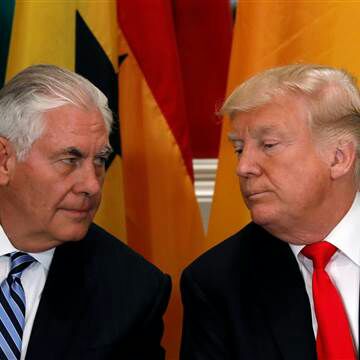
Mr. Trump has been making very harsh and unusual comments against the JCPOA since he stepped into the political arena, whether as a presidential contender or as president. Wiser statesmen in the Trump administration, including [Secretary of State Rex] Tillerson and [Defence Secretary James] Mattis, who are well aware of the high costs of the unilateral annulment of the JCPOA by the White House, are seeking to temporarily maintain the deal to save face for now before adopting a raft of hostile and cumulative measures to gradually, and possibly, prompt Iran itself to pull out of the agreement.

To that end, they have adopted a two-pronged tactic.

First, they are seeking a political formula based on which the Trump administration’s retreat would not seem like a real pullout in the court of public opinion and in the eyes of the international community. Under the formula, they would try to create the impression that any possible leniency over the JCPOA, such as the renewal of the suspension of nuclear sanctions, is part of an overarching – and, of course, tougher – policy vis-à-vis Iran.

In other words, they want to create the impression that while revising their policy on Iran, they have devised a plan based on which the “tactical and transient leniency” is completely justifiable. Naturally, in order to establish their credibility and vindicate their move, they suggest that a ceremonial hostile action be taken in dealing with Iran in tandem with the leniency on the JCPOA. For instance, they announce that staying in the JCPOA is in line with US national interests for the time being, but draw on the Countering Iran’s Destabilizing Activities Act recently approved by Congress to unleash legal attacks on the Islamic Revolution Guards Corps (IRGC)!

Second, they are seeking a legal formula that would enable them to conclusively justify for their European allies their hostile actions against Iran. Based on this formula, they would introduce the JCPOA as an agreement which is subject to two different legal systems – the US legal system and the one governing the JCPOA itself. This way, they would promote a dual legal system scenario, so that they would be able to introduce any action that would be against the JCPOA as a move that is in compliance with America’s domestic law!

US Ambassador to the UN Nikki Haley has been promoting this scenario for quite some time. Mattis, too, openly referred to it in a Congress hearing session.

Now, all the team has to do is to persuade Trump to advance that policy, which requires patience and calm.

Iran FM Lays Wreath to Honour Iraq’s Late Ex-President

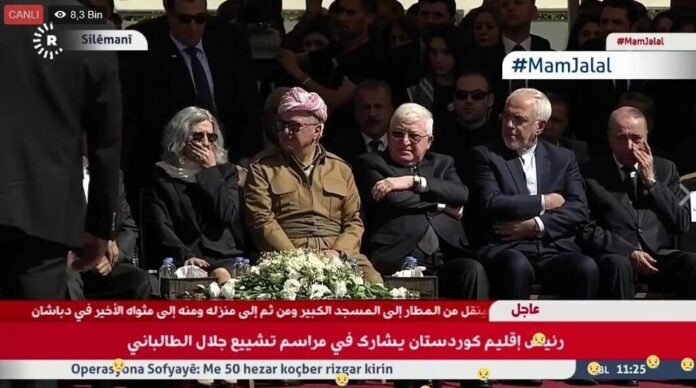
Zarif, as the first foreign dignitary attending the funeral service held on Friday for Talabani, offered a wreath to honour the late Iraqi president.

On the sidelines of the ceremony, Zarif once again stressed the importance of maintaining Iraq’s national unity and territorial integrity.

“The Islamic Republic of Iran is an all-time friend of Iraqi people, including the country’s Kurds, and does not regard the strategic mistakes made by certain individuals as those of Iraqi Kurds,” said Zarif.

The top Iranian diplomat expressed hope that everybody in Iraq’s Kurdistan woulf return to the path of Jalal Talabani, who, as Zarif said, was the symbol of Iraq’s unity and territorial integrity.

The foreign minister described late Talabani as a friend of Iran and an indefatigable fighter against the dictatorship of former Iraqi dictator Saddam Hussein.

Zarif referred to Talabani as a person who always made efforts to secure Iraq’s unity and territorial integrity. The foreign minister also paid tribute to the late politician.

Iran Condemns Pakistan’s Balochistan Terrorist Attack

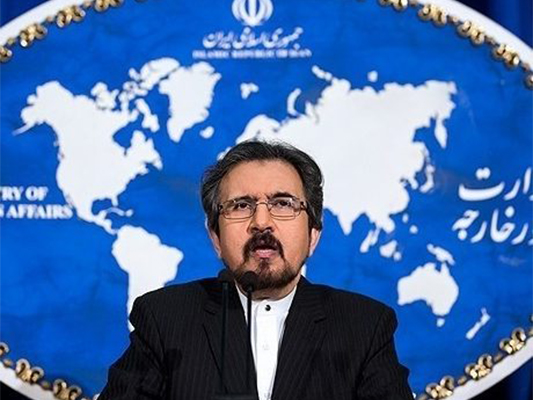
Iran Condemns Pakistan’s Balochistan Terrorist AttackIran’s foreign ministry spokesman has strongly denounced a recent deadly attack on a Shiite shrine in Pakistan’s south-western province of Balochistan.In a Thursday statement, Bahram Qassemi censured the suicide bombing outside a shrine in a remote village of Balochistan which claimed tens of lives and wounded dozens more.
He also expressed sympathy with the Pakistani government and nation and the families of the bloody tragedy’s victims.
“Such blind and cowardly attacks are aimed at creating insecurity in Pakistan and fomenting discord and religious conflicts. The Pakistani government and nation must be vigilant and preserve unity and peace to keep up their fight against terror and eradicate violence in the country,” Qassemi underscored.

Iran FM to Attend Talabani’s Funeral in Iraqi Kurdistan

Foreign Ministry Spokesman Bahram Qassemi declared on Thursday that FM Mohammad Javad Zarif will travel to the city of Sulaymaniyah tomorrow at the head of a high-ranking delegation to attend the Iraqi ex-president’s funeral.
In his statement, Qassemi described Talabani as a politician who spent his life on maintaining Iraq’s freedom, independence, unity, and territorial integrity and strengthening friendship between the Iranian and Iraqi nations.

Iran’s Gahar Lake: A Fishing Destination for Tourists

It is a permanent sweet-water lake in the upper and lower Gahar in Zagros mountain range. 2350 metres above sea level, the lake came into existence after a landslide and now is a tourist destination for trout fishing.

Here are IRNA’s photos of the lake:


‘Iranian Kurds Won’t Go for Secession If Their Rights, Demands Realized’

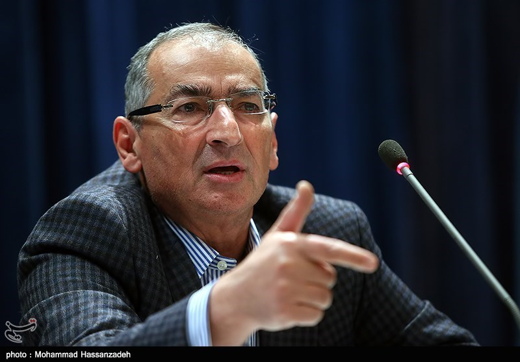
Sadegh Zibakalam

One week on since the contentious plebiscite on the secession of the Kurdistan region form Iraq, the move continues to draw local and international reaction. In the latest development, Saad al-Hadisi, the spokesman for Iraqi Prime Minister Haider al-Abadi, has announced that Kurdistan must first annul the outcome of the referendum, which runs counter to the Constitution, and enter into serious negotiations in order to boost Iraq’s territorial integrity. On the other hand, it is said that US Secretary of State Rex Tillerson, in a statement, described the result of the plebiscite as unacceptable and illegitimate.

Although authorities of the Kurdistan region have underlined their right to self-determination and described it as a prelude to the resumption of talks with Baghdad, many experts believe that an irreversible trend has begun in northern Iraq and that the process can get entangled with other crises in the Middle East to trigger new conflicts in the region.

Accordingly, our country’s officials have voiced concern over the possible secession of Kurdistan from Iraq and called for a settlement of the issue through political processes. Nevertheless, on the other hand, some academic and expert circles in the country have adopted different positions on the referendum so far and even believe the establishment of an independent country called Kurdistan will serve Iran’s strategic interests in the long run.

Accordingly, political commentator and academic Sadeq Zibakalam has, in a Farsi article published on Ebtekar newspaper, weighed in on the latest developments pertaining to the controversial referendum on the secession of the Kurdistan region from Iraq. Explaining the current and historical situation of the Middle East, he has expressed his view on what should be done to allay the concerns in Iran over the issue. He says adopting a heavy-handed approach on the issue will work for a short time only, and that Iraqi Kurds will continue to sept toward independence once the situation is right.


History Cannot Be Ignored

This professor of political sciences says his stances on the Kurdistan referendum has drawn strong opposition from the conservative camp in Iran.

“I think it would be difficult to insist on democratic and independence-seeking stances. Regrettably, conservatives’ opposition to the plebiscite in Kurdistan is understandable. I believe the right to self-determination should be recognized. Civil rights are not simply a charter with beautiful words, but forms the basis for the right to self-determination. If we do not recognize this right for Kurds in Iraq, then it is not clear what civil rights would mean.”


The question is whether Iran, Turkey, the US, the European Union and even Israel can express their views on the issue of Kurdistan’s independence. I believe “no.” It is only the Kurdish people in Iraq that can decide about their future. Another point is that what we know as Iraq, Syria or Jordan today are all countries which are the result of the Sykes–Picot Agreement at the end of World War I and the collapse of the Ottoman empire. None of the current borders existed before the first World War, so we cannot say the Kurdistan has always been part of historical Iraq.

Today’s Iraq was created in 1956, i.e. around 60 years ago. Before that, it was part of the Ottoman empire for 4 to 5 centuries. Earlier, it had been part of the territories of the Mamluk Sultanate, Abbasids and the Rome Empire for so long, and in fact there was no such territory as “Iraq.” So, we cannot insist on the idea that it is being disintegrated. Based on the borders created as a result of the Sykes–Picot Agreement (the names of two British and French diplomats), Syria and Lebanon would become the colonies of France, and areas including Iraq, Saudi Arabia and the Persian Gulf littoral states would become colonies of the UK. Therefore, the Sykes–Picot Agreement was a deal which was similar to forced marriage. Kurds did not start their struggle to exercise their right to self-determination recently; rather, they have been trying to secure their right for several decades. Before the 1979 Islamic Revolution of Iran, before the reign of former Iraqi strongman Saddam Hussein and during his rule, Kurds’ struggle did not stop. Some 180,000 Kurds were killed by Saddam Hussein’s regime during the eight-year Iraqi imposed war on Iran in the 1980s.

Still, we are unfortunately witnessing that conservatives easily regard the referendum as an Israeli-Zionist plot. This is while before the establishment of Israel, Kurds were struggling for their right to being autonomous. So, in my estimation, history should not be ignored. Although one can say that the current situation is not a suitable time for holding referendums due to the crises in the Middle East, it should be stressed that Kurds will have a country for themselves in the coming years.


Independence of Iraq’s Kurdistan: A Point of No Return

Zibakalam further touched upon recent remarks by Nazim Dabbagh, the representative of the Iraqi Kurdistan region in Iran. Dabbagh had said the referendum was not aimed at securing the region’s secession, but that it wanted to draw attention to the demands of the Kurdistan region. Zibakalam said Dabbagh wanted to play with words.

“Nothing can stop the independence of Iraq’s Kurdistan, and, in fact, we have passed that point. Even if the Iraqi central government wants to stop that independence by force like in the Saddam Hussein’s era, it will be temporary, and Kurds will move toward full independence the first chance they get.”


Iran’s Misgivings Understandable

Zibakalam also weighed in on remarks by Mr. Jalaeipour, who has drawn a comparison between the referendum in Scotland and that in Iraq’s Kurdistan, and who believes the Kurdistan plebiscite is not defensible. Zibakalam said it is understandable that there is no support for the Kurdistan referendum in Iran.

“The reason is that a considerable number of Kurds live in western Iran, and the Iranian government is concerned that the establishment of an independent country called Kurdistan could provide motivation for secession or autonomy by Iranian Kurds. In my idea, the way to ease Iran’s concerns is to give minorities the rights stipulated for them in the Constitution. In other words, in order to encourage Iranian Kurds to remain loyal and not go for secession, their civil rights should be realized and their demands met. If their demands are fulfilled, there will be no reason for secession in Iran’s Kurdistan.


Iran Moving towards Forming Military Alliance with Turkey, Iraq

In an editorial on Tuesday, the Persian-language Sobh-e Now daily has discussed the possibility of forming a regional military alliance between Iran and its neighbours. Here are excerpts from the piece:

The new round of efforts made by General Staff of the Armed Forces of the Islamic Republic of Iran to expand military and security cooperation with its neighbours is of great importance.

Major General Mohammad Baqeri’s visit to Turkey last month was an effective initiative that took place at this level for the first time since the Islamic Revolution of Iran, and paved the way for further military interactions between Tehran, Ankara and Baghdad.

As the situation is getting worse in Iraq’s Kurdistan region, this cooperation is becoming more serious, and over the past days we have witnessed more visits made by the senior military officials of the three countries.

In the history of military cooperation between Iran, Turkey and Iraq, we see the three countries have signed the Baghdad Treaty (CENTO) in 1955. The treaty was signed by the order of trans-national powers so as to compete with the former Soviet Union, but it quickly changed its way and broke down.

However, at present the new military cooperation is based on genuinely realistic dimensions, and the seriousness of the risk of disintegration on the one hand next to the threats of terrorist groups on the other hand have made all the three countries stand together.

In light of these military and security collaborations, one can expect the three countries stop transnational interventions. By such collaboration and sharing experiences, they can also confront the new emerging threats and foil the plots of enemies to disintegrate the region into smaller parts and altering the equations in favor of the Zionist regime.

The pre-emptive and rapid coordination between the three countries regarding the Kurdish region case is a model of successful regional military cooperation. It surprised international observers and also foiled the new sectarianism plot hatched by US, Israel and their Arab allies in the region.

Iran among World’s Largest Producers of Fruits, Vegetables

The world’s population is increasing while its resources are decreasing. In such situation the role of the world’s fruit and vegetable producers is of particular importance.

According to a Farsi report by IANA which has quoted figures from insidermonkey.com, Iran has ranked eight in a global list of fruit and vegetable producers.

Based on the 2014 information of the United Nations’ Food and Agriculture Organization (FAO), the Islamic Republic has produced 12.7 million tonnes of fruit and 21.4 million tonnes of vegetables. It mainly exports different types of nuts, grapes, dates, figs, fresh strawberries, raspberries, black mulberries and other fruits like melon, apples and pears.

Most of Iran’s vegetable exports include cucumbers, cabbage, cauliflower, tomatoes, onions, garlic, leeks and other similar vegetables which are exported fresh or frozen.

China, Hong Kong, India, the United States, Mexico, Turkey and Brazil rank first to seventh while Spain and Egypt stand at 9th and 10th place after Iran.