


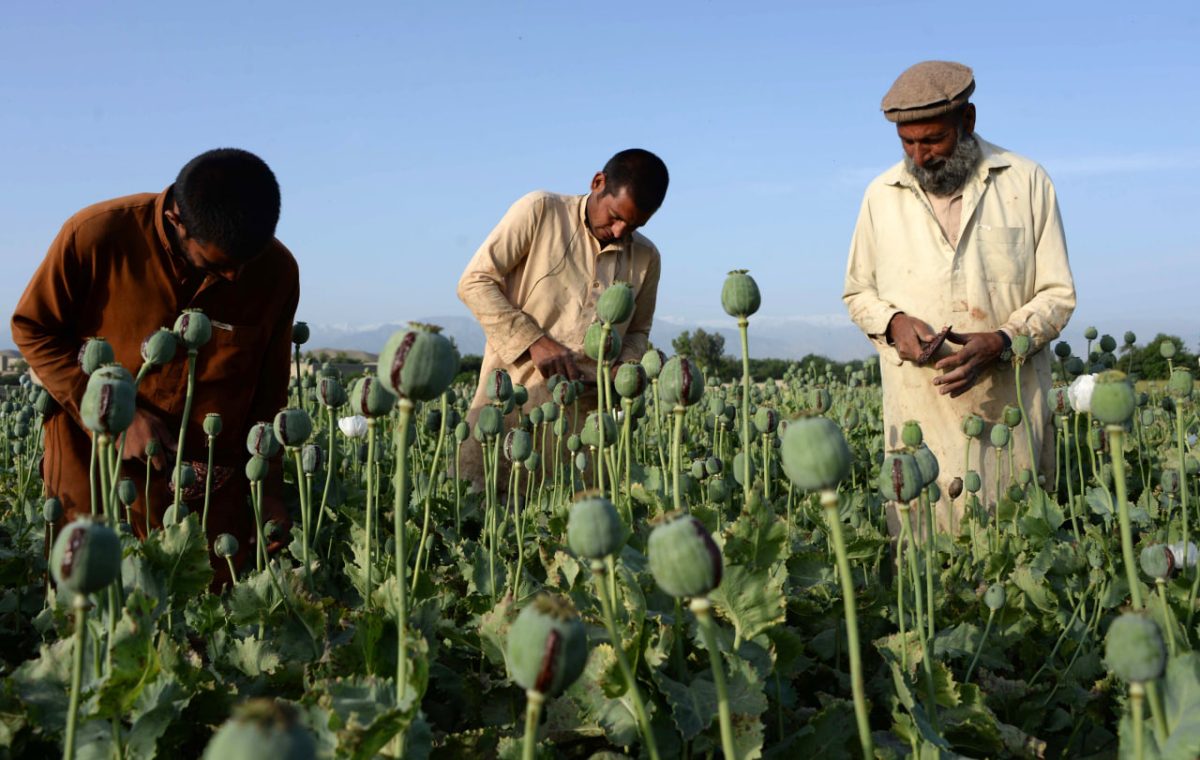
The ban has slashed poppy production overall to just 10,200 hectares (25,200 acres) this year, “one of the lowest levels ever recorded” in Afghanistan, the UN Office on Drugs and Crime (UNODC) said.
However, it also resulted in a shift from traditional growing areas in the south to northern provinces further from the control of the Taliban authorities.
In Badakhshan on the border with Tajikistan, surveyed in the agency’s most recent report, poppy production has jumped since the Taliban returned to power in 2021.
In that province and in nearby Kunduz and Balkh, “on average, 85 percent of families… reported either no replacement or only partial replacement of their poppy income” after abandoning production, the report found.
Many farmers are instead growing wheat and other cereals, but in 2023 “the average per-hectare income from wheat was just $770, whereas opium poppy yielded around $10,000 per hectare”.
“This income loss goes far beyond households, weakening rural purchasing power, reducing local economic activity, and increasing communities’ overall vulnerability to poverty and food insecurity,” stated Oliver Stolpe, the UNODC’s regional representative.
The agency urged more efforts to encourage growing of high-value crops such as saffron, nuts, herbs and fruits such as apricots and grapes, which are better suited to the arid and high-altitude landscapes.
Poppy revenues had long been a major source of Afghanistan’s economic output before the Taliban returned to power in 2021.
Output of opium, the core ingredient in heroin, was estimated at 296 tons this year, the agency had reported last month, a 32 percent drop from the year before.
Farmers’ income from opium sales fell by nearly half, to $134 million this year from $260 million in 2024.
The government’s deputy ministry on counter-narcotics welcomed what it called an “important reflection of the realities and genuine challenges of farmers”.
In a response included in the UN findings, it said the authorities would pursue policies aimed at “sustainable rural development and reducing dependency on narcotics crop cultivation”.