


Given the popularity of traditional Iranian medicine among the Iranian people from various social classes, and its strong historical and cultural background, we have decided to introduce this medical tradition on Iran Front Page (IFP).
In the previous article, we presented a general introduction of traditional Iranian medicine. Here, we will be discussing the important topic of temperament, one of the most important pillars of that medicine.
What is the science of temperament?
Temperament is crucial to the identification of people’s physical and mental characteristics and can help diagnose and treat diseases. Also, the type of food that we eat can change the body’s general workings based on our humor.
Therefore, by correcting nutrition models, one can avoid food that would harm the body and instead prioritize food that is proportionate to one’s humor type.
Below, we will discuss humor and its different types:
The relation between temperament and general health in traditional Iranian medicine
In the nature, each plant and creature has a specific humor, and according to traditional medicine experts, food intake should be compatible with that humor. A case can be made that, by using temperament, one can fully control one’s temperament and physical health.
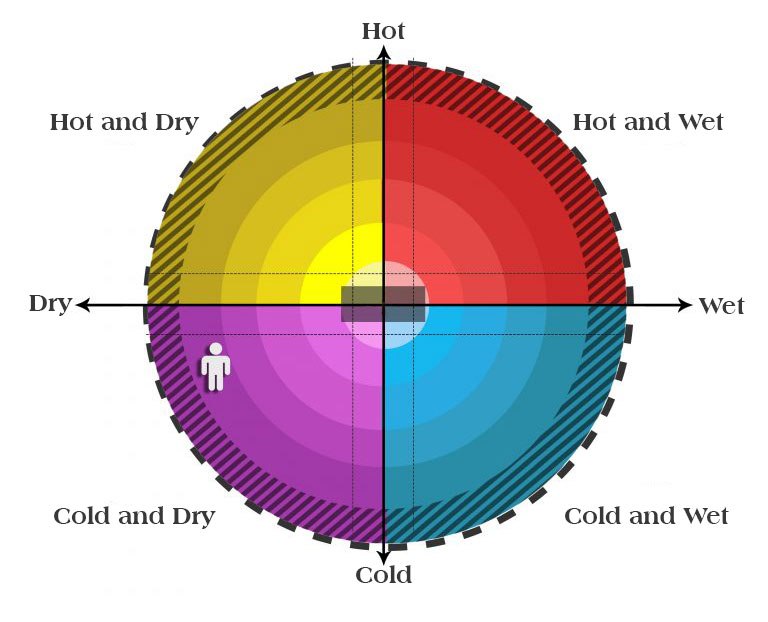
Based on the level of hot, cold, dry, and wet phlegm in one’s body, a person’s humor can be categorized into the four groups of hot/wet, hot/dry, cold/dry, and cold/wet.
Four compound humors in traditional Iranian medicine
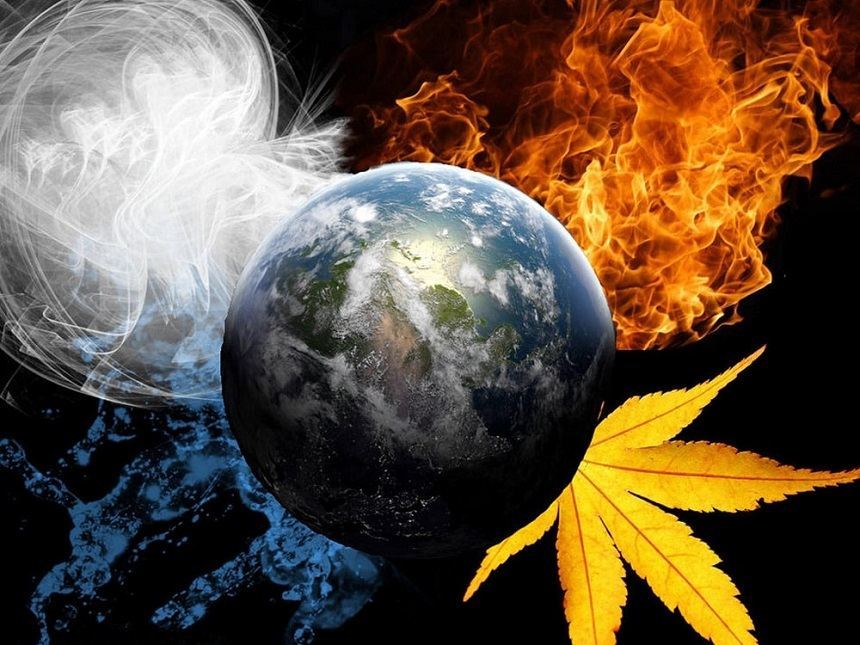
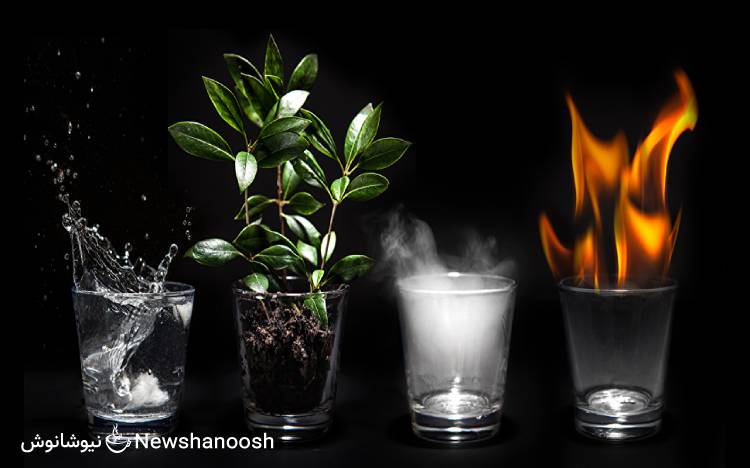
The body’s humors, which are based on the four classical elements, are: hot (fire), cold (earth), wet (water), and dry (air). There are four compound humors based on those:
- Hot and dry: choleric
- Hot and wet: sanguine
- Cold and dry: melancholic
- Cold and wet: phlegmatic


An individual’s humor can be identified via the following methods:
- Touching the body
- Examining the complexion and condition of the skin
- Sleep condition
- Examining the hair
Prescriptions for each humor
Temperament is founded not just on general advice but also specific guidelines related to nutrition and lifestyle for each humor. Thus, food that may be helpful to one individual could be harmful to another. In fact, any nutrition guideline and lifestyle, no matter how healthy, can harm one’s health if it is not compatible with that individual’s humor.
Temperament is a key topic in traditional medicine. By correctly identifying the humor, one can rightly pinpoint the cause of a disease and prescribe a treatment. Things such as the nutrition, amount of rest, and mental states of an individual are directly related to her humor.
Paying attention to such physical features as a person’s skin color, shape of hair, the growth level of hair, muscles mass, mental states, etc. can help identify a humor. Additionally, signs such as a pale or a red face, lack of sleep, boredom, a short temperament, facial blisters, etc. may be signs of malnutrition, requiring medical action.

Signs of a hot and wet humor
The most important physical and behavioral characteristics of people with a hot and wet humor are:
- A heavy, muscular build, and a stout and fleshy body;
- a reddish skin color;
- thick, greasy hair;
- a good memory;
- a warm body with prominent capillary on the skin;
- a soft and balanced skin;
- and painful menstruation (in women).
- Physically, they are active and have a good stamina.
- Behaviorally, they are bold, emotional, humorous, dreamy, and happy, and they have a flexible, convincing, and friendly personality.
Signs of a hot and dry humor
The most important physical and behavioral characteristics of people with a hot and dry humor are:
- Large, strong joints;
- big eyes;
- a dry skin;
- and coarse, thin hair.
- Physically, they are very active; and mentally, they are meticulous and methodical.
- They have a good memory and appetite.
- Behaviorally, they are generous, clever, and emotional. They have a short temper, and tend to be desultory in conversation.

Signs of a cold and dry humor
The most important physical and behavioral characteristics of people with a cold and dry humor are:
- A thin and bony structure, with small joints;
- a cold and dry skin, with fine texture;
- small eyes, a low voice (they talk fast, though);
- coarse, dark, dry, thin, hair;
- a good short-term memory;
- and a changing appetite.
- Physically, they are stable and active. They tend to have insomnia.
- Mentally, they have a restless quality, and are sensitive, fragile, timid, and anxious.
- Women experience depression during menstruation.
- Behaviorally, they have good management qualities, and are thoughtful and analytical.
- They also have an artistic thinking, and are idealists.
Signs of a cold and wet humor
The most important physical and behavioral characteristics of people with a cold and wet humor are:
- A heavy and portly build;
- a cold, light, moist, and soft skin;
- thin, greasy, and light hair;
- large eyes, and a low-pitch voice;
- and their main sign is that they are portly and have layers of fat. They have a tendency to gain weight.
- They have a low stamina and are slow thinkers.
- Behaviorally, they are timid, emotional, and bashful. They have a calm personality and are good listeners.
Next, we will present traditional Iranian medicine’s advice for each humor.
What are the 4 types of temperament?
- Hot and dry: choleric
- Hot and wet: sanguine
- Cold and dry: melancholic
- Cold and wet: phlegmatic