


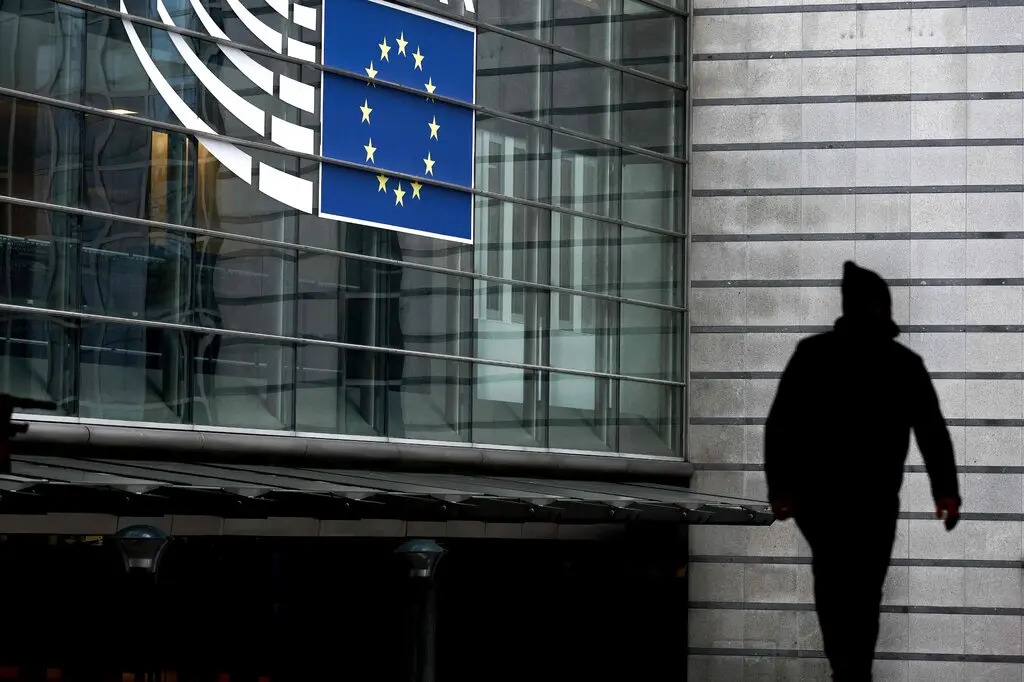
The 27-nation bloc is scrambling to bolster its ally Ukraine, as US President Donald Trump pushes for a deal with President Vladimir Putin to end the fighting.
Officials have insisted the talks will last as long as it takes to hammer out an agreement, saying both Ukraine’s survival — nearly four years into the war — and Europe’s credibility are at stake.
“We will not leave the European summit without a solution for the funding of Ukraine,” European Commission head Ursula von der Leyen stressed.
The EU’s executive wants to fund a loan to Ukraine by using frozen assets from Russia’s central bank, though it is holding on to a back-up plan for the bloc to raise the money itself.
Ukraine President Volodymyr Zelenskyy will join the EU summit to try to press the case for using Russia’s assets — with German Chancellor Friedrich Merz among those insisting there was “no better option.”
Zelensky stated Thursday that any failure by EU leaders to agree on a plan to use frozen Russian assets to support Ukraine would be a serious challenge for his war-torn country.
“I will speak with all the leaders, present our arguments, and I very much hope we can obtain a positive decision. Without it, there will be a big problem for Ukraine,” Zelensky told reporters, ahead of a visit to Brussels for an EU summit.
But Belgium’s Prime Minister Bart De Wever said he had not been convinced so far.
“I have not seen a text that could persuade me to give Belgium’s agreement,” he told Belgian lawmakers, adding that he hoped to see something convincing on Thursday.
The vast bulk of the funds are held by international deposit organization Euroclear in Belgium, and the government fears it could face crippling financial and legal reprisals from Moscow.
EU officials say they have gone out of their way to allay Belgian worries and that multiple layers of protection — including guarantees from other member states — mean the risks are minimal.
“At this stage, the guarantees offered by the Commission remain insufficient,” De Wever added.
The EU estimates Ukraine needs an extra 135 billion euros ($159 billion) to stay afloat over the next two years — with the cash crunch set to start in April.
In a bid to plug Kyiv’s yawning gap, the Commission has proposed tapping 210 billion euros of frozen assets, initially to provide Kyiv 90 billion euros over two years.
The unprecedented scheme would see the funds loaned to the EU, which would then loan them on to Ukraine.
Kyiv would then only pay back the “reparations loan” once the Kremlin compensates it for the damage.
In theory, other EU countries could override Belgium and ram the initiative through with a weighted majority, but that would be a nuclear option that few see as likely for now.
The commission’s back-up plan involves the EU raising the money itself, but it would require unanimous approval from the EU’s 27 leaders and Hungary has ruled it out.
De Wever nonetheless is planning to try to revive that idea, and other countries may be open to his argument.
Bubbling close to the surface of the EU’s discussion are the US efforts to forge a deal to end the war.
Zelensky also confirmed Thursday that Ukrainian and US delegations would hold new talks on Friday and Saturday in the United States aiming to end the Russian invasion.
Ukraine has announced that Washington was “pressuring” the EU not to use the assets as they view them as a vital bargaining chip in winning over Russia.
But EU officials deny that and say that, if anything, the push for peace has spurred the efforts to tap the Russian funds.
Given that Ukraine has only months before the shortfalls bite, diplomats and officials insist leaders will find a way to keep funds flowing — even if this week yields only a loose deal with details to be hammered out later.
“I hope that we get this over the finishing line,” EU top diplomat Kaja Kallas said, adding, “Putin is banking on us to fail, so we shouldn’t give him that.”