


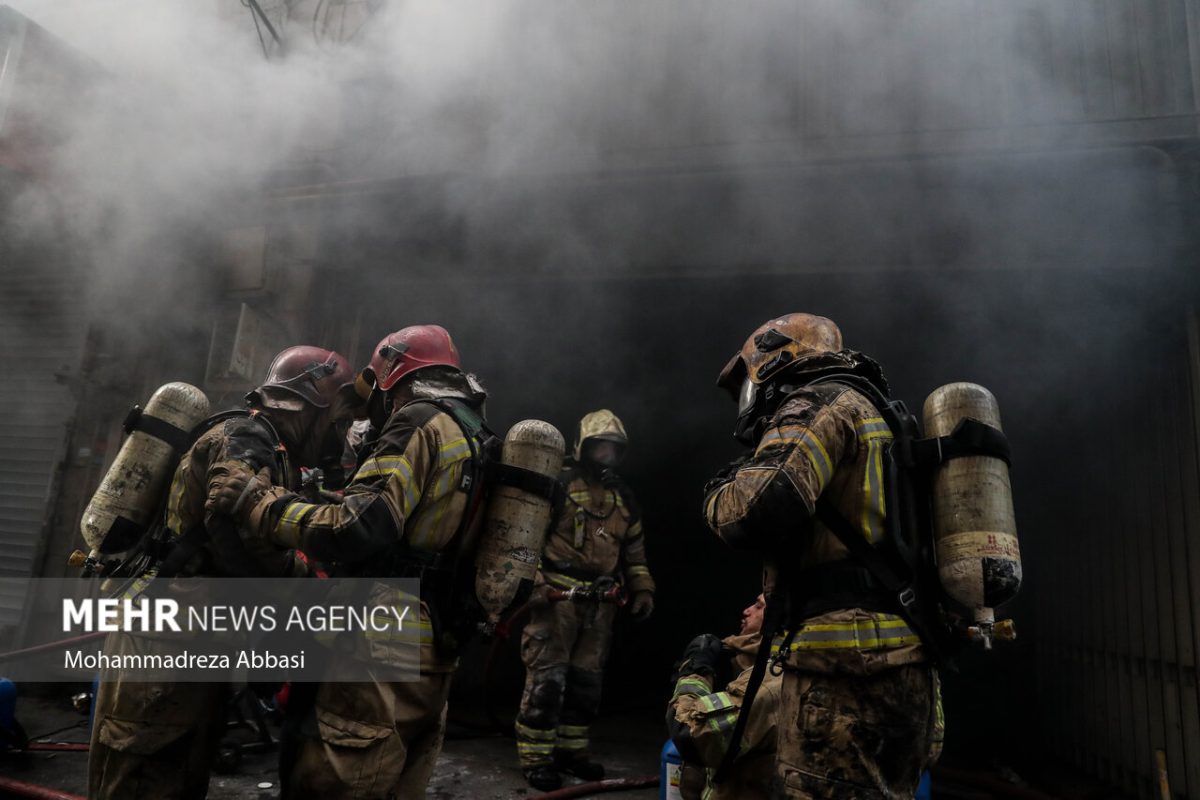
To better understand the situation, we need to examine annual statistics on fires and explosions caused by gas leaks in buildings throughout Iran.
This helps assess whether such incidents, as portrayed by some media, are truly abnormal or instead part of a recurring accident pattern within the country.
This report, without seeking to confirm or deny the cause of any specific event, presents documented data to provide a rational perspective on the issue. It suggests that gas-related fires and explosions are common in Iran; a reality that may now be used as an opportunity for amplification and exploitation in the current media conflict.
High Volume of Fire Incidents in Iran: A Constant Reality
Iran faces a substantial number of fire-related incidents annually, only some of which result from gas leaks.
According to the Iranian Fire Department and Emergency Services, more than 450,000 firefighting operations take place nationwide each year, with roughly 170,000 fire incidents annually.
These figures reflect extensive emergency activity and a permanent backdrop of incidents, not limited to gas-related causes.
The Silent Killer: Carbon Monoxide Poisoning as an Ongoing Crisis
One of the deadliest gas-related incidents in Iran is carbon monoxide (CO) poisoning, commonly referred to as the “silent killer.”
This colorless and odorless gas claims hundreds of lives each year.
The Iranian Legal Medicine Organization regularly publishes statistics:
• In the Iranian year 1400 (2021–2022), 839 people died from CO poisoning.
• In the first 7 months of 1401 (March–October 2022), 255 deaths were recorded.
• In the first 6 months of 1402 (March–September 2023), fatalities rose by 22.3% to reach 274.
• On average, about 900 people die from CO poisoning in Iran each year.
These figures highlight an ongoing public health crisis, especially prominent in colder seasons due to unsafe heating appliances or poor ventilation.
Gas Leak Explosions: Recurrent Incidents Over the Years
Explosions and fires stemming from gas leaks in buildings are not new. They’ve occurred across the country for many years.
Although comprehensive yearly statistics are not publicly available for all such incidents, many documented cases confirm their repetition:
• In 2020, a gas leak at the Sina Athar Health Center in Tehran caused an explosion that killed 19.
In the same year, a powerful natural gas blast in Ahvaz collapsed a five-story building, killing one and injuring 12. Another case in Rasht involved severe burns from a gas heater leak.
• In 2023, a carbon monoxide leak in a residential complex in Tehran’s Lavizan district poisoned 10 people due to faulty boiler equipment.
• In 2024, a blast in an unfinished building on Tehran’s Farahzadi Street injured 4.
A similar explosion in a caretaker unit at a religious center in Hamedan caused damage to 45 homes, shops, and vehicles, injuring one person slightly.
• Most recently, in July 2025, a gas explosion near Chitgar Lake in Tehran injured 4, and another in the Pardisan neighborhood in Qom injured 7, both attributed to gas leaks.
These incidents across cities like Tehran, Ahvaz, Rasht, Deyhuk, Karaj, Hamedan, and Qom reveal the wide geographical distribution of this recurring issue.
Root Causes: Negligence and Technical Failures
Most of these incidents are linked to internal, preventable causes. Customer negligence and human error are among the most frequent reasons for gas accidents.
For instance, in East Azarbaijan Province in 2018, gas user negligence caused 219 incidents, and in 2019, 38 people died due to improper natural gas use.
Poor installation, malfunctioning equipment, and inadequate ventilation are also major contributors.
Conclusion: Common Events as Media Opportunities
Based on the available data, fires and explosions caused by gas leaks are frequent and ongoing in Iran, resulting in significant human and financial losses each year. Organizations like the National Iranian Gas Company and the Fire Department continue efforts, responding to over 343,000 calls in 2024 – 24% of which led to emergency services – but still face challenges like negligence, faulty infrastructure, and hazardous buildings, with 17,000 high-risk structures in Tehran alone.
Thus, while every incident requires accurate investigation, the recent rise in media focus, especially following Israel’s attack on Iran, suggests a trend toward using these commonly occurring events as tools in the media battle.
These incidents, regardless of the specific cause behind each one, unfold within a statistical backdrop of similar events across the country, a fact that should be considered in public analysis.